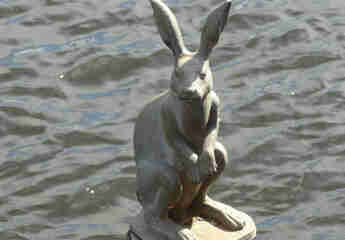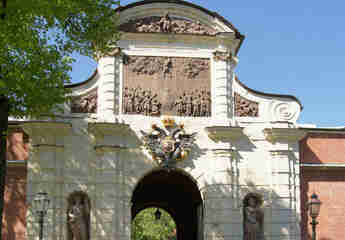
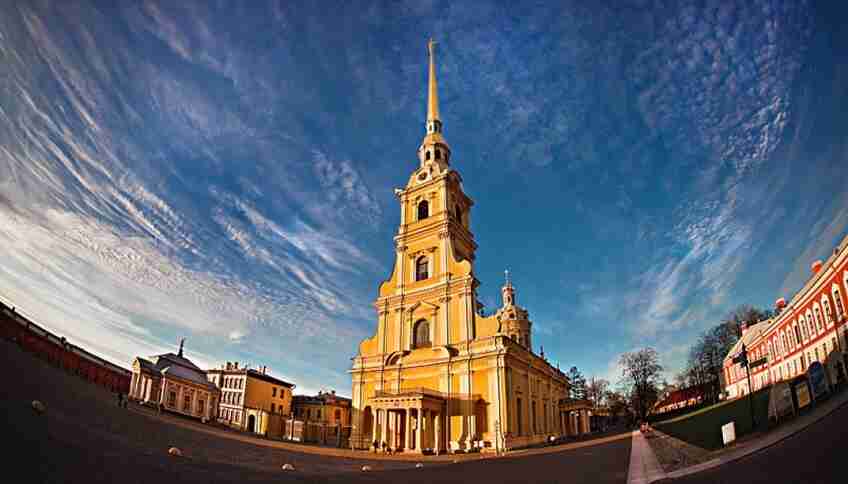
Peter and Paul Cathedral is the same age as Saint Petersburg and the progenitor of Petrine Baroque. After Peter I chose the site for the fortress on Hare Island in 1703, one of its first buildings was the wooden Church of Peter and Paul.
Nine years later, construction began on a stone church with a design unusual for Russia. Architect Domenico Trezzini developed a unique project that blended features of Italian and Northern European styles. Peter and Paul Cathedral marked the beginning of Petrine Baroque, which defined the distinctive look of Saint Petersburg.
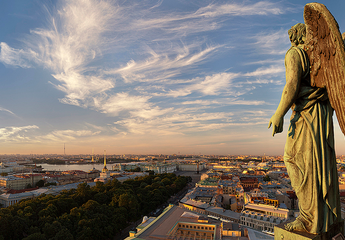
The rectangular building is crowned by a small dome, overshadowed in comparison with the multi-tiered bell tower above the entrance portico. For more than 300 years, the slender gilded spire rising into the sky was the city’s main landmark and its tallest structure. Only in 2012 were two buildings constructed that surpassed the 122-meter spire, topped with a golden angel holding a cross in his hands.
The interior of Peter and Paul Cathedral is also quite unusual; its space resembles a ceremonial hall in a palace. The main decoration is a gilded carved iconostasis in the style of a triumphal arch, richly adorned with patterns and sculptures. There is also a preacher’s pulpit here, uncharacteristic of Orthodoxy, opposite which stands a throne for the tsar with a canopy and symbols of royal power.
This cathedral also served as an imperial burial vault; 50 Russian tsars and princes and members of their families rest here in white marble sarcophagi.