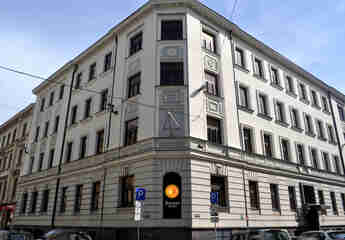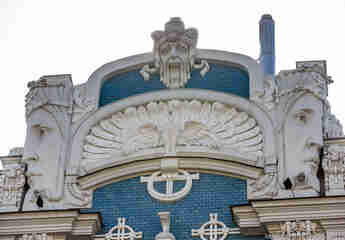
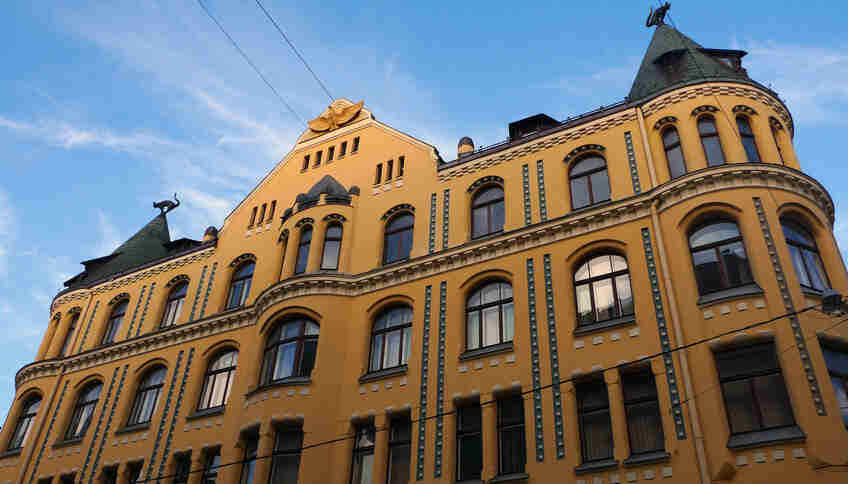
Cat House could have remained one of many examples of Art Nouveau in the architectural ensemble of Old Riga, if not for its special story. It was built at the beginning of the 20th century by order of a wealthy local resident named Blumer. The building turned out, of course, elegant and beautiful - architect Friedrich Scheffel worked on its construction.
However, the ambitious Blumer acted in an original way - on the roof of the house he placed sculptures of black cats with arched backs and raised tails, turning their backsides toward the building of the Great Merchants' Guild. With this gesture he expressed his dissatisfaction over being refused admission to the society he passionately wanted to join. After numerous disputes and frictions, Blumer was eventually accepted into the company of Riga's wealthy men, and the cats were turned in a "respectable" direction. Today they still adorn the building, being one of the calling cards and symbols of the Latvian capital.
Above the facade of the house there is a sculptural image of an eagle with outstretched wings. The entrance is decorated with floral ornamentation characteristic of the Art Nouveau style.
At present, on the first floor of Cat House, there is a jazz restaurant and a casino called "Black Cat".