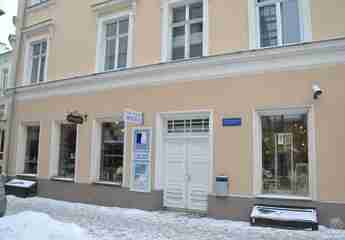

On Mazā Pils Street in Old Riga, you can spot three old houses standing tightly side by side. These structures are now regarded as a single architectural composition, despite the fact that they were built at different times and have different styles.
They are called "The Three Brothers," which echoes the similar Tallinn "Three Sisters": the Estonian capital also has three "conjoined" 14th-century buildings.
The Riga "brothers" serve as a visual guide to the evolution of residential house construction, from the 15th through the 18th century. The eldest brother, also called the "white" one because of the color of its walls, appeared on Mazā Pils Street in 1490. Its architectural style is Gothic with Renaissance elements, traditional for the Middle Ages.
The middle brother has no nickname; it is simply the "middle" one because it stands in the center. Its birth date is 1646, the era of the decline of Dutch Mannerism, which was becoming increasingly rare in more substantial buildings but still remained relevant for small private structures.
The youngest brother, the smallest both in age and in size, is called the "green" one because of its soft green color. The influence of Baroque can be felt in its forms - this is especially noticeable if you look at the characteristic curved Baroque gable.
"The Three Brothers" were restored in the 1950s according to the design of Peteris Saulitis. At the same time, the rear rooms and courtyards of the houses were combined.