
What locals say about Lucerne:
“Here, kings always felt like guests, and guests like kings”
Updated for 2026: Lucerne still feels made for a short Swiss escape: compact, scenic, easy by train, and perfect for mixing an Old Town walk with lake or mountain day trips.
Most travelers arrive in Lucerne by train. The views from the window already do half the work: green alpine meadows, grazing cows and goats, bells in the distance, mountain slopes, rocky ledges, little waterfalls, and postcard-worthy farmsteads. It all sets exactly the right mood. Since we are arriving by rail, the natural place to begin our walk is the railway station.
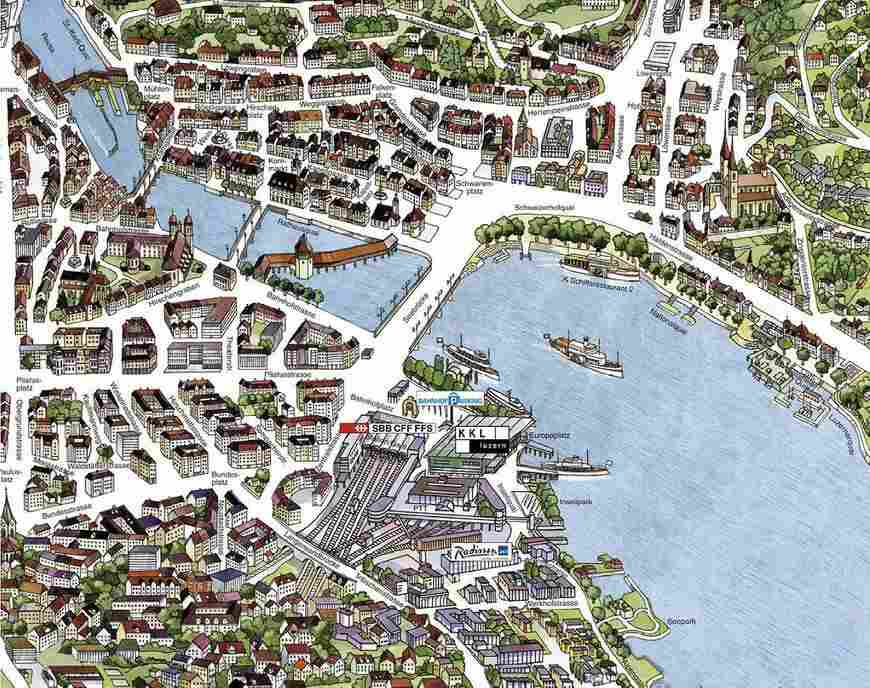
Lucerne's main sights on the city map
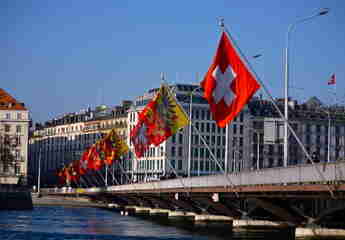
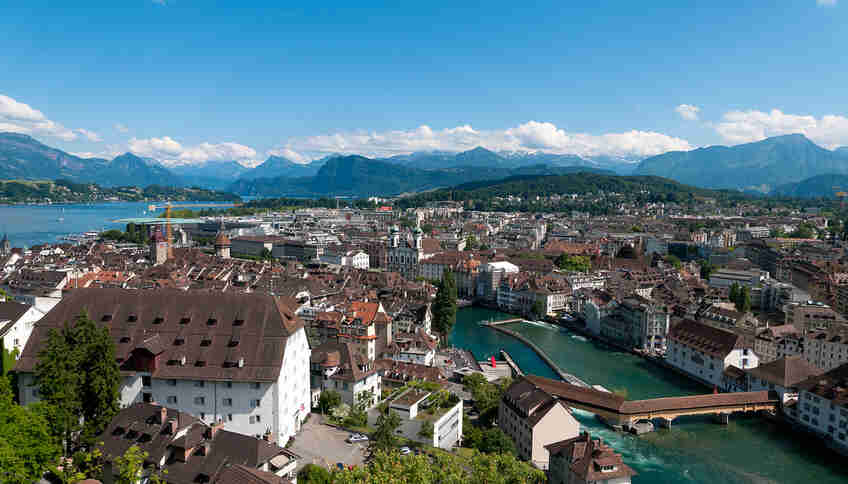
Whether this was deliberate or just a happy piece of urban planning, the station sits right beside the historic center. Visitors step outside, see the Old Town almost immediately, and very often fall for Lucerne on the spot. Straight ahead is the Seebrücke. It marks the point where Lake Lucerne flows into the Reuss River. This broad crossing opens up a wonderful panorama of the city, the lake, and the mountains. Many of the most important sights in Lucerne (with the possible exception of the Lion Monument carved into the rock, which we will get to in a moment) can be spotted from here. The Town Hall, Saint Leodegar Church, the monumental Jesuit Church, Château Gütsch, the Water Tower, and the famous Kapellbrücke are all in view. But first things first.

The landmark that dominates the center is, without question, the octagonal Water Tower. Over the centuries it has served as a prison, a watchtower, an archive, and a treasury, but above all it has remained one of the enduring symbols of Lucerne.

The tower stands beside the Kapellbrücke – the oldest covered wooden bridge in Europe, built in 1365.

From the embankment you can also see another Lucerne landmark – the Jesuit Church. The Jesuits arrived in Lucerne in the 16th century, and the first stone of the future church was laid on December 3, 1666, the feast day of Saint Francis Xavier. Eleven years later, the new church was consecrated by a papal representative.

Inside, the church is dressed in white and gold, and the ceiling is covered with paintings. Organ concerts are still held here from time to time.

Lucerne's main church is dedicated to another of the city's patron saints – Saint Leodegar. A monastery once stood on this site, and the present building combines Gothic and Renaissance elements.

Curious travelers should step inside for the wrought-iron details, wood carving, and the famous 1640 organ. Organ concerts are often held here as well.

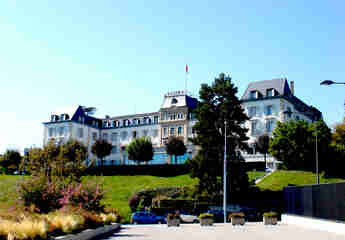
Look up to the nearby hills and your eyes will almost certainly land on a graceful white castle above the city. This is the Château Gütsch hotel.

It occupies a historic hilltop building with fantastic views over Lucerne, the lake, and Mount Rigi.

Its list of notable guests is impressive: Queen Victoria, Leo Tolstoy, Charlie Chaplin, Alfred Hitchcock, Sophia Loren, and many others. The hotel, which faintly recalls Neuschwanstein Castle in Germany, has become one of Lucerne's most recognizable silhouettes. If you want to spend the night here yourself, you can book a room through the usual hotel platforms.

Once you leave the embankment, you'll find dozens of cozy restaurants and plenty of shops to tempt even the most determined shopper. From here, make your way to Lion Square.

Here stands one of Lucerne's main sights – the “Dying Lion” sculpture, which Mark Twain called “the saddest and most touching stone carving in the world.” The lion's head is bowed, a spear pierces its shoulder, yet its paw still shields the French fleur-de-lis. Carved into the rock face, the monument commemorates the Swiss Guards who died in Paris during the French Revolution while defending the French royal family.

One day is enough to see Lucerne's historic center. But where next? You can head up Mount Rigi for sweeping Alpine views, lakes, and valleys, or continue deeper into the mountains for more active adventures. Another classic excursion is Reichenbach Falls, famous from the Sherlock Holmes story in which he supposedly died fighting Professor Moriarty. Or you can continue to Geneva or Zurich. What to see there is easy to find in the free Ever.Travel mobile app, where the main attractions of Switzerland's two most popular cities are marked.
In preparing this article, photos by Flickr werner boehm *, Quasebart ...thank you for 3 Million Views, Davide Seddio, groovedan.com, GabSu Lee, fotojaps, Márcio Wariss Monteiro, Le Monde1, adlin, NikitaY, suresh_krishna, and Swissrock were used.