
Before you is not just the greatest monument of architecture, but a true marvel of the engineering genius of the ancient Romans – the Pantheon. This enormous structure is the Temple of All Gods. Both in composition and in its construction, it is unique. Nothing like it had yet been built at the beginning of the 2nd century AD.
To be absolutely precise, the Pantheon had stood on this site even earlier, but in 80 the old building burned down. In its place, a new one was built in 126, which differed noticeably from the previous one and has been very well preserved to this day.
Above the entrance to the temple there is an inscription in Latin, which in translation means the following: “Marcus Agrippa, son of Lucius, elected consul for the third time, built this.” It refers to the builder of the first (burned-down) Pantheon, so this inscription serves as a kind of “tribute” in his honor.
We help you plan a trip to Rome. Download our free mobile app – Travel Planner and Guide for iPhone or Android. Hundreds of sights, ready-made walking routes, the ability to create your own routes, an offline map and GPS. Everything you need for an interesting trip.
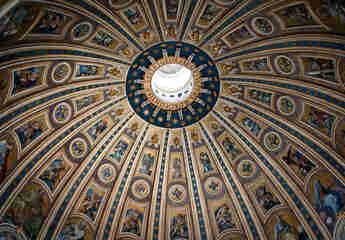
Interestingly, the Pantheon was originally a pagan temple, but thanks to the fact that in 609 it was consecrated as the Christian Church of St. Mary and the Martyrs, it managed to survive to this day. Inside, the Pantheon is a circular space decorated with columns and multicolored marble. Above is a high dome with a round opening in the middle. This is the only source of natural light in the temple; there are no other windows here. However, this lighting is quite sufficient during the day, and at summer noon the descending shaft of light becomes almost tangible.
In the side chapels of the Pantheon lie the famous painter and architect Raphael Santi, the first king of unified Italy Victor Emmanuel II, and his son Umberto I.
Thank you! Every time you book hotels on Booking.com through our site, you help us describe one more place, create one more route, or develop one more city. Thank you for that!
banner booking
Routes and guides to Rome:
- Guide to Rome
- What to see in Rome in one day
- First self-guided route in Rome: Vatican and the Vatican Museums
- Second self-guided route in Rome: Castel Sant'Angelo – Piazza Navona - Pantheon - Trevi Fountain
- Third self-guided route in Rome: Colosseum — Roman Forums — Piazza Venezia — Trajan's Column — Imperial Forums
- Fourth self-guided route in Rome: Trastevere district
- Night walk in Rome