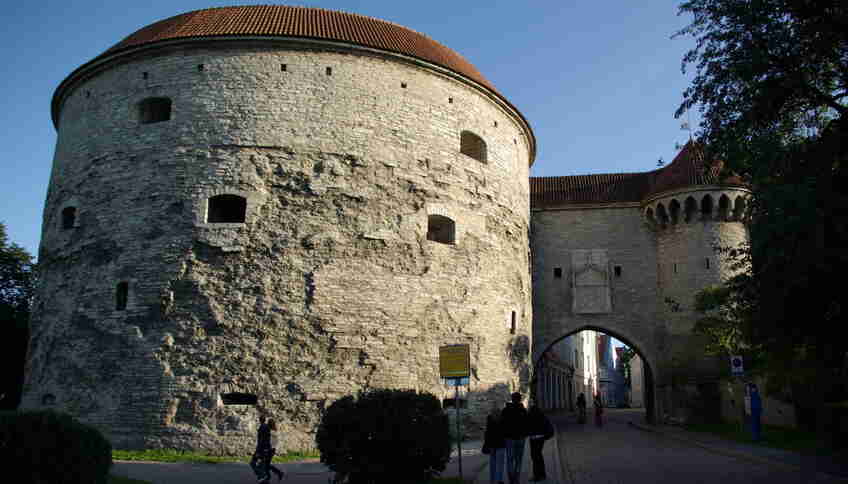
Thanks to its coastal location, throughout its centuries-long history Tallinn was frequently attacked both from land and from sea. There were always plenty of those eager to seize this "pearl" of Northern Europe. To protect the city, local residents built strong and mighty walls around it. Among the few fortifications that have survived to this day, the Sea Gate, built in 1265, deserves special attention. Through this entrance, merchants and goods arriving in Estonia by sea entered the city, and during military battles the gate also served as a defensive structure.
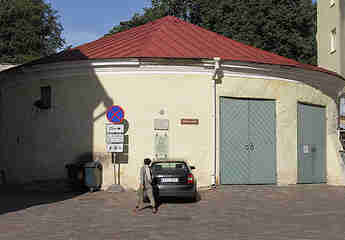
Later, when firearms appeared in Europe, the Sea Gate was additionally fortified and a thick-walled artillery tower was added to it, which was immediately nicknamed "Fat Margaret" because of its imposing size. Impressive and impregnable, in different centuries it served both as a prison and as an arsenal. Today, the Maritime Museum is located in the "Fat Margaret" tower, where rare exhibits from Estonia's maritime and fishing history are kept. It is also worth visiting the observation deck of the famous tower. From the relatively modest height of twenty meters, an unexpectedly breathtaking view opens over the Old Town and the Baltic Sea.