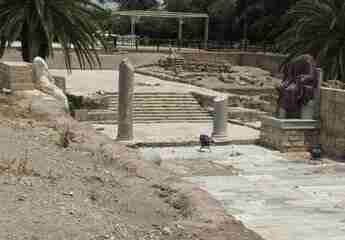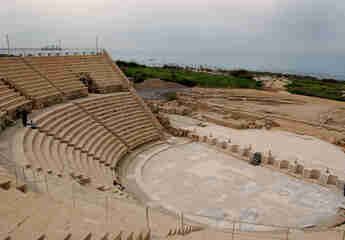
Throughout its history, Caesarea changed hands many times. Jews, Roman governors, Arabs, Crusaders, and Mamluks ruled here in turn. The latter, under the command of the Egyptian Sultan Baybars I, drove the Crusaders out of the fortress in 1265 and razed the great ancient city to the ground. For a long 600 years, desolation reigned here, and the ruins of Caesarea of Palestine were covered by sand and washed by the waves of the Mediterranean Sea.
From the 15th century, Palestine came under the rule of the Ottoman Empire, which was constantly at war. As the Ottoman army was replenished, soldiers from another province of the empire - Bosnia - were brought to Palestine.
At the beginning of the 19th century, a settlement of Bosnian Muslims arose among the ancient ruins. The Bosnians built small one-story shell-stone houses here. They made their living through fishing and agriculture.
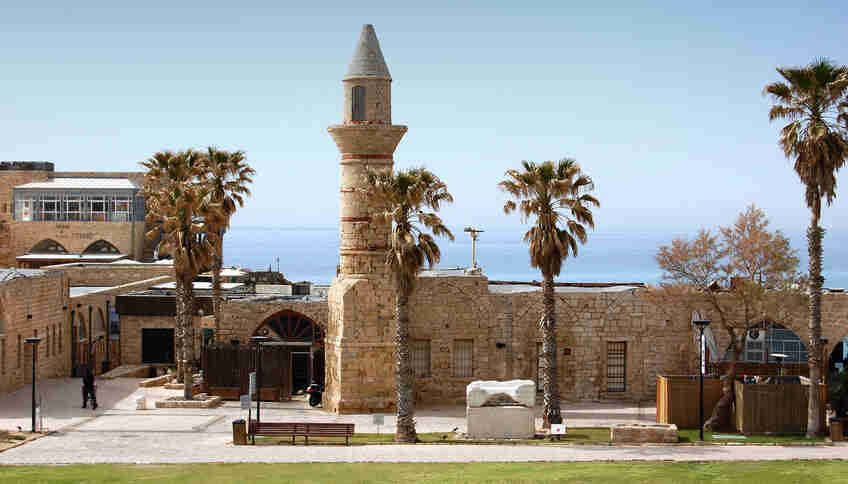
The sheikh of the Bosnians decided to get rid of the last reminder of the Crusaders and blew up the last structure they had left behind - the lighthouse. In its place, the Bosnian Mosque was built: a simple stone building with tiled roofs and a tall minaret.
There is a legend describing the second birth of Caesarea. A pilot flying near these places noticed the tall minaret of the Bosnian Mosque. On closer inspection, it turned out that the mosque was surrounded by ancient ruins. Historians and archaeologists undertook excavations there, and that is how Caesarea National Park came into being.