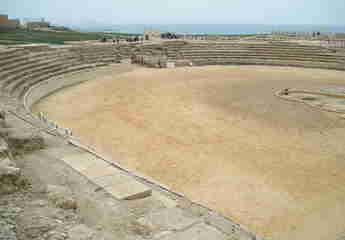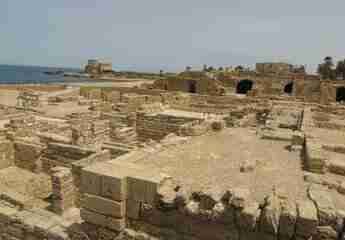

When the Roman emperor Augustus granted King Herod possessions that included a small settlement in the harbor, there were only a few houses here. In just 12 years, Herod built on this site a beautiful city that became the largest port of Palestine.
Caesarea became the center of rule of the Roman procurators, a bustling trading city, and a base for the Roman legions. As the country's main sea gateway, Caesarea received many cargoes and passengers. Despite the fact that the natural conditions of this place were not ideal, a harbor was created here that rivaled the best Roman and Greek ports. The waters of the port consisted of outer and inner bays, protected by a 500-meter breakwater.
Herod was renowned as a great builder. His innovations in construction were centuries ahead of their time; for example, in Caesarea there was already an excellent sewage system and water supply as early as 10 BC.
During the construction of the port, Herod used a technology similar to modern concrete. The ancient concrete breakwaters created from natural materials have survived to this day. Some piers were carved directly into the coastal bedrock.
Today, the port of Caesarea has become a place for fascinating diving among ancient artifacts from the early Common Era and the Middle Ages, sunken ships, and parts of buildings that went under water during earthquakes.