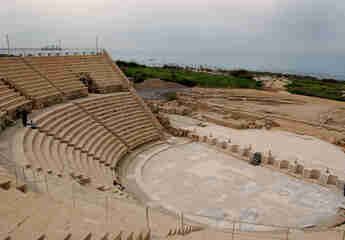
Caesarea was an important port and a wealthy city, which made it a tempting prize in the eyes of all conquerors. After the Romans, Byzantines, and Arabs, the Crusaders came here, and this was in 1101.
The knights recaptured Caesarea from the Muslims, settled in the city, and even found here an ancient cup of green glass, which they declared the Holy Grail and sent to Genoa.
In 1187 Caesarea was captured by the great Sultan Saladin, but in 1191 the city was recaptured by the legendary Richard the Lionheart. After that came a series of clashes between Christians and Muslims.
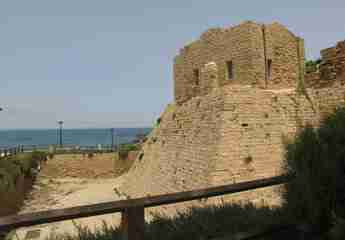
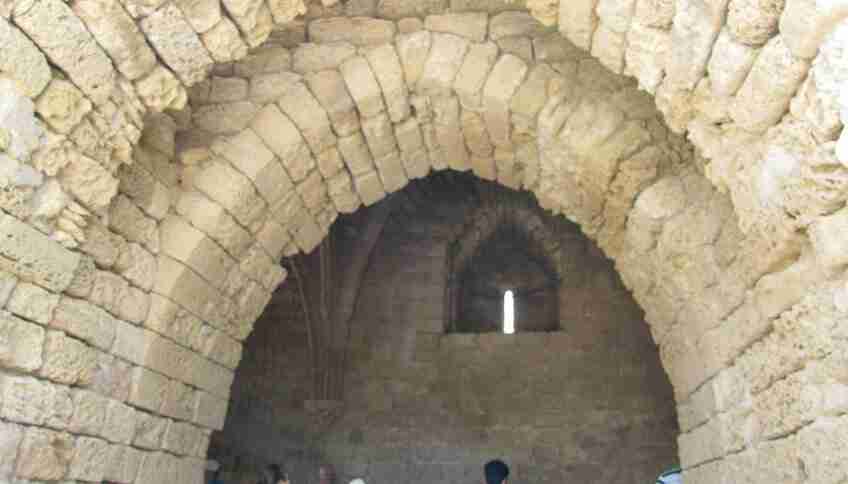
After 60 years, the Crusaders realized that they were unable to repel the constant attacks of the growing Muslim armies. King Louis IX ordered a wall with defensive fortifications and a wide moat to be built around Caesarea. The wall, 1.6 kilometers long and four meters thick, had defensive towers, narrow secret passages and, of course, the Crusaders' Gate.
A drawbridge across the moat led to the gate, and the gate itself was located in a three-story tower. The outer gate was barred from the inside with logs, and from the outside, after it was closed, an iron portcullis was lowered. As the enemy approached, they were doused with boiling oil from the tower, pelted with stones, and shot at with bows.
If the enemy still managed to break through the first gate, a surprise awaited them - the tunnel in the tower turns 90 degrees, and the next gate has to be broken down while standing in a narrow, awkward tunnel. The Crusaders' Gate significantly complicated subsequent attempts to capture the fortress and left its mark on the history of the entire city.