Caesarea was for a long time the main port of Palestine, through which overseas goods entered the country. Roman legions were stationed in the city, rulers and procurators held court, and wealthy Jews and Greeks lived there. It is no surprise that trade here was very lively and large-scale.
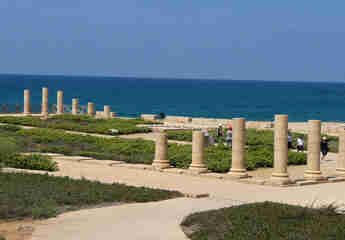
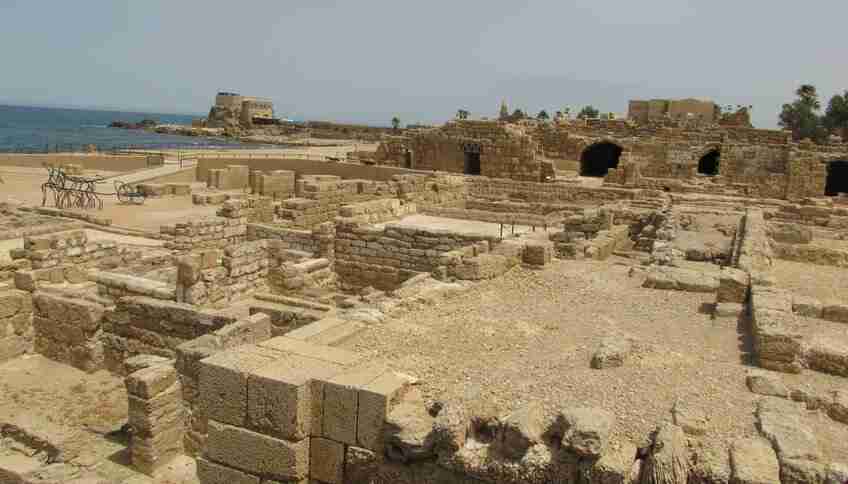
In the southern part of the ruins of Caesarea, you can walk along the partially preserved narrow streets where merchants once lived and did business. The Commercial District mainly consists of buildings from the Roman and Byzantine periods, roughly dating from the I-III centuries.
It is clear that trade here brought in good profits and allowed merchants to afford decent housing in the Commercial District. Buildings constructed two thousand years ago proved to be very solid and have survived to the present day.
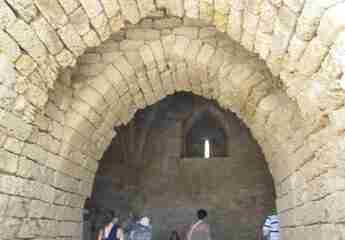
Most of the administrative and commercial buildings were erected above extensive tunnel arches that served as warehouses for goods. The arches have been preserved excellently - much better than the shop and office buildings standing on top of them.
Quite often, one comes across magnificent floor mosaics skillfully restored by archaeologists. Among the remains of the walls, an exceptionally well-preserved bath, or rather a small oval washing pool, looks particularly impressive.