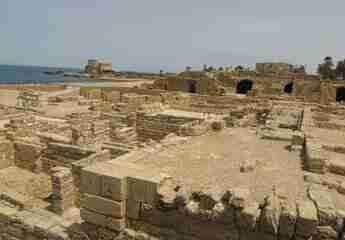

Along the seashore, next to the Palace on the Reef, stretched Herod the Great's hippodrome-amphitheater. According to contemporaries, in particular Josephus Flavius, the amphitheater could hold from 7,000 to 9,000 people in its stands. And despite all this, this grand structure was Caesarea's small hippodrome, while excavations of the large hippodrome are still ongoing to this day.
The hippodrome-amphitheater is called this because, besides being used for its intended purpose as a stadium and a place for the Romans' favorite entertainment - horse racing, it often also served as an arena for fights or performances.
The Caesarea Olympics were held at this hippodrome, an analogue of the Olympic Games in Greece. Legends say that it was here that Herod introduced the system of second and third places, awarded with silver and bronze, because earlier there had been only one winner in the Olympics.
This place is also known for its bloody history. After the suppression of the Great Revolt, entertainments involving executions were held in the amphitheater arena, in which unarmed captive Jews were forced to fight to the death against armed Roman legionaries or wild beasts. Demonstration tortures and executions of the leaders of Jewish uprisings, or those considered to be such, were also staged here. All these spectacles drew crowds of many thousands, who applauded the cruel performances.