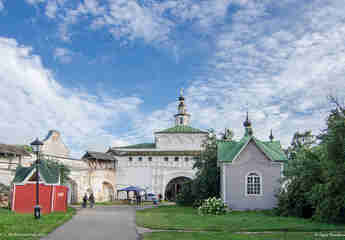
Nikitsky Monastery in Pereslavl-Zalessky is notable for its resilience: fortified under Ivan the Terrible as a true fortress, it withstood the invasion of Polish troops in 1609. And even after being burned to the ground by the Lithuanians in 1611, just thirty years later it was reborn, of course, not without the help of the royal Romanov family.
The construction of new buildings on the monastery grounds continued until the 19th century, even during the harsh secularization reform carried out by Catherine II with regard to church properties.
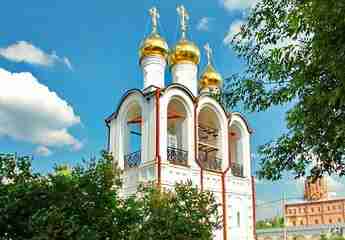
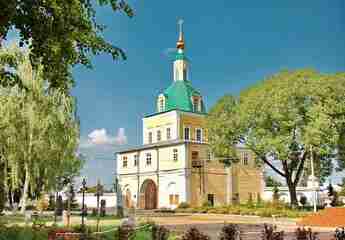
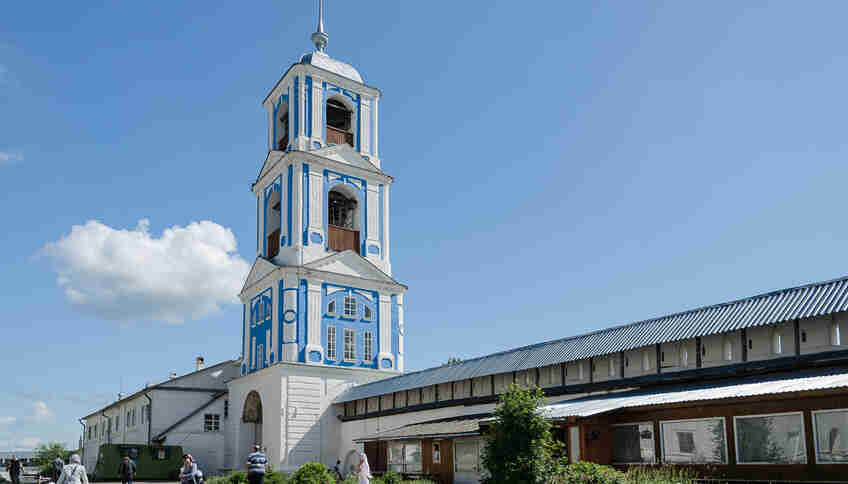
The last work of architectural art is the bell tower with the Church of the Archangel Gabriel, which was presumably erected in 1818 on the site of the ancient gate church of Saint Archangel Michael, built back in the time of Ivan the Terrible.
The bell tower building stands out strikingly against the backdrop of the monastery's overall architectural ensemble, which gravitates toward Old Russian standards of architecture. The bell tower was built in the new fashion of that time: three tiers above the gate are decorated with pediment-like features, and above rises a small narrow cupola, giving the entire structure a certain slenderness and visual lightness.