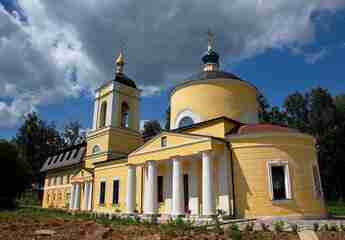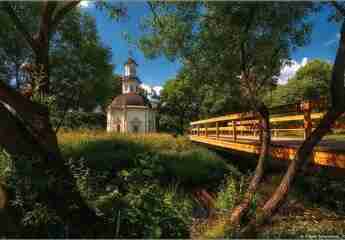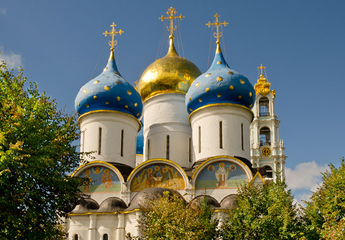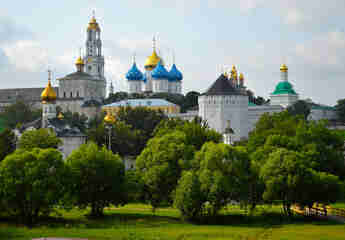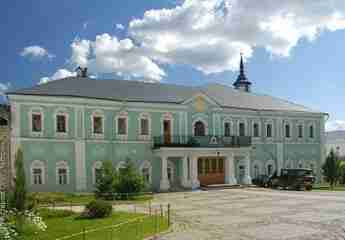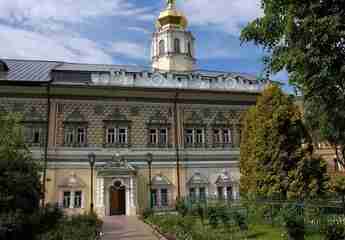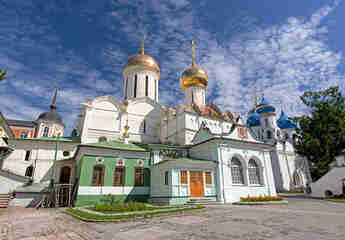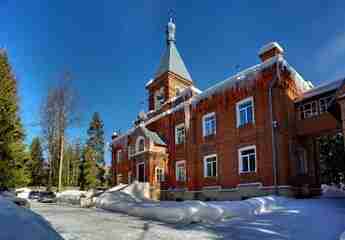
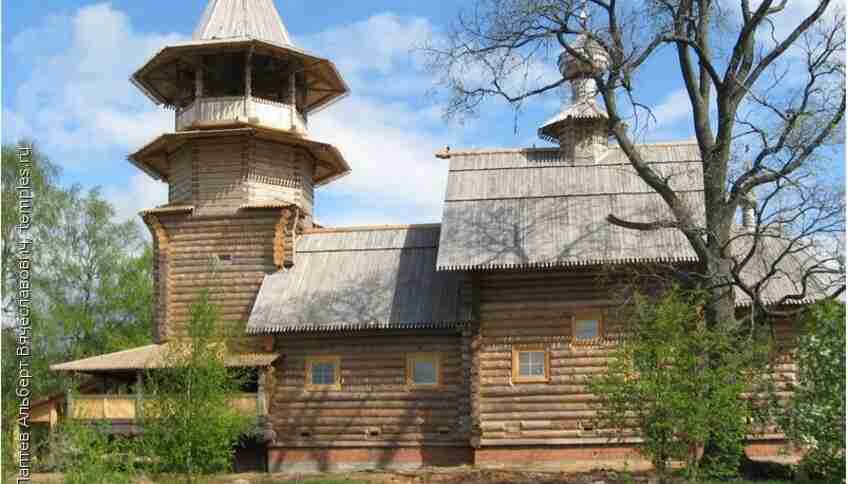
Blagoveshchenskoye Metochion is located in the village that Prince Andrei Radonezhsky donated to the Troitse-Sergiyeva Lavra in the 15th century. The village of Blagoveshchenie is a quiet corner that has preserved the ancient layout of a Russian settlement — a quadrangular one, when houses were built around the perimeter of the central square with a church. As early as 1425, there was a Blagoveshchenskaya Church here, after which the village began to be called, whereas previously it had borne the name Knyazhe.
The monastery cared for the settlement and its church; icons, candles, and valuable books were sent here from the Lavra, and in return the village supplied the monks with provisions.
In 1608, Blagoveshchenskoye Metochion burned down during the siege of the city by Lithuanian troops. The village and the church were rebuilt only in 1623.
In 1764, the state seized church lands, including the villages assigned to the Lavra. Without the monastery's support, Blagoveshchenskaya Church fell into decline and merged with the parish of the neighboring settlement. The wooden structure deteriorated, and only at the end of the 19th century was it renovated, with a brick foundation and an iron roof added. A parish school and the priest's house were built nearby.
But ruin struck the metochion again — after the revolution the church was closed. At various times it housed a reading room, barracks, and a shelter for workers. By 1970 the church walls had almost collapsed — they were full of holes and rotten. The church was dismantled in order to relay it and replace the rotten logs, but it was never reassembled. Only in 2007 was Blagoveshchenskoye Metochion revived.