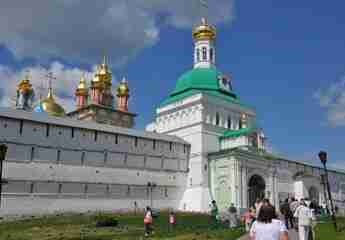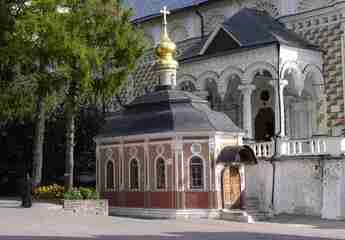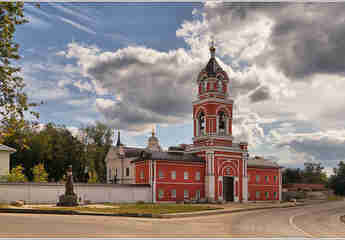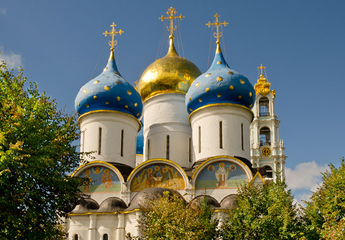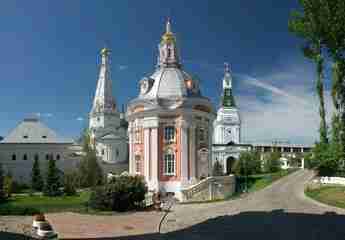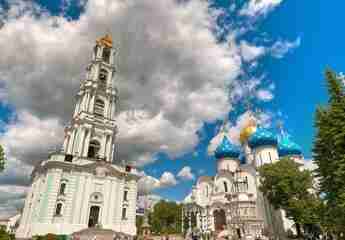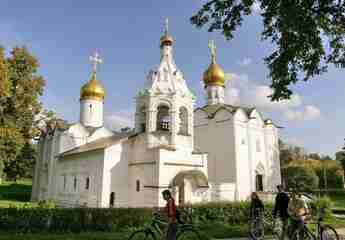
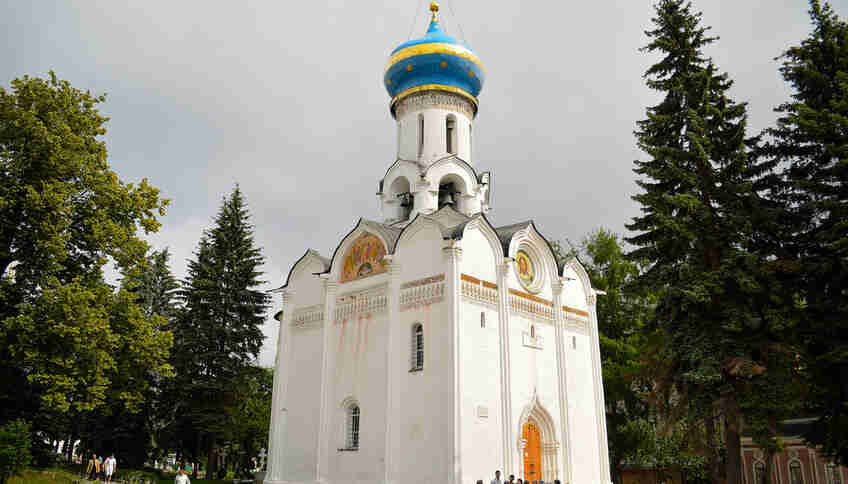
Khram Soshestviya Svyatogo Dukha na Apostolov is the second-oldest structure of Troitse-Sergiyeva Lavra. It was erected in 1476 by talented Pskov architects, whom Prince Ivan III "the Great" himself invited for this noble undertaking.
When the church was built, Troitsky Cathedral served as the architectural model: its proportions, height, and main artistic forms were preserved. But there is one important difference - the new church had a belfry at the top, and this revolutionary decision was a first in the history of Russian church architecture.
The "church beneath the bells" was built of brick rather than stone, like Troitsky Cathedral. It is crowned with one broad dome with a cross, which stands on a cylindrical pedestal above the belfry, equal in height to the base in the form of a four-pillar quadrangle.
In addition to the Pskov masters, specialists from Europe were also involved in the construction, so progressive patterns and details can be seen in the decorative design, noticeable on the church's apses. But our masters added their own unique touch - Pskov bell-ringing, known in the western part of Russia but completely untypical for Moscow.
The first paintings on the walls of Tserkov Soshestviya Svyatogo Dukha appeared in the second half of the 18th century and have been renewed more than once since then. The three-tier iconostasis made of rosewood is decorated with icons created by Lavra masters.
On Sundays and feast days, Divine Liturgies are held in the church, beginning early in the morning.