Updated for 2026: Kapuzinerberg is still one of the best easy viewpoints in Salzburg—quiet, green, and just a short walk from the busiest Old Town streets.
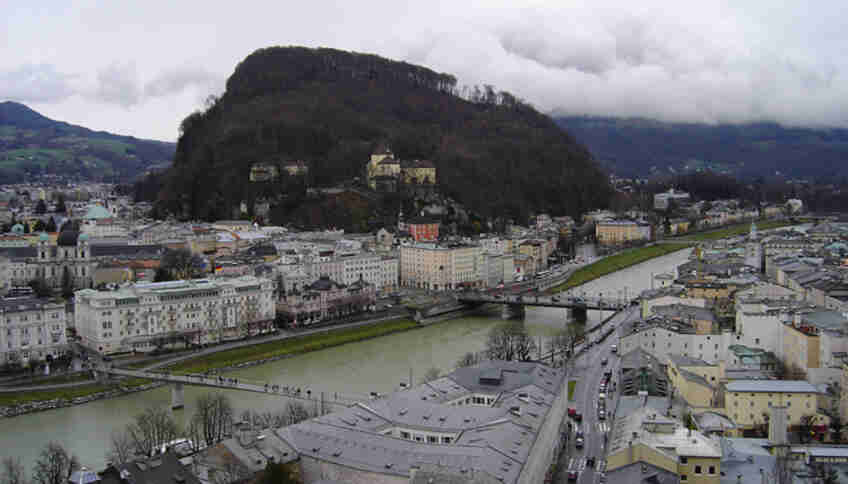
Across the Salzach from Salzburg's Old Town, Kapuzinerberg rises above the city like a green wall. The hill takes its name from the Capuchin monastery, an active religious house that still stands here today.
The monastery was built between 1599 and 1605 and expanded over the following decades. The Capuchins were forced out more than once: the complex was desecrated during the Napoleonic era, and in 1938 the Nazis expelled the friars and planned to replace it with a stadium.
In 1945 the monks returned, helping care for the wounded and for refugees in the aftermath of the war. The monastery was restored in the late 1980s, and Pope John Paul II later stayed here during a visit to Salzburg. The living quarters are closed to visitors, and only a small part of the church is open so the community can keep its daily rhythm of prayer and work.
Make it to the top of Kapuzinerberg and you'll be rewarded with one of Salzburg's best panoramas, with the historic center spread out below. The classic route starts from Linzergasse and passes 13 chapels from the first half of the 18th century, each depicting scenes from the Passion of Christ, as well as St. Felix Gate, built in 1632.
On the slopes you'll also find the house associated with writer Stefan Zweig; visitors over the years included names such as James Joyce, Thomas Mann, and H. G. Wells.