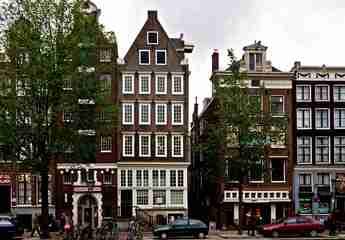
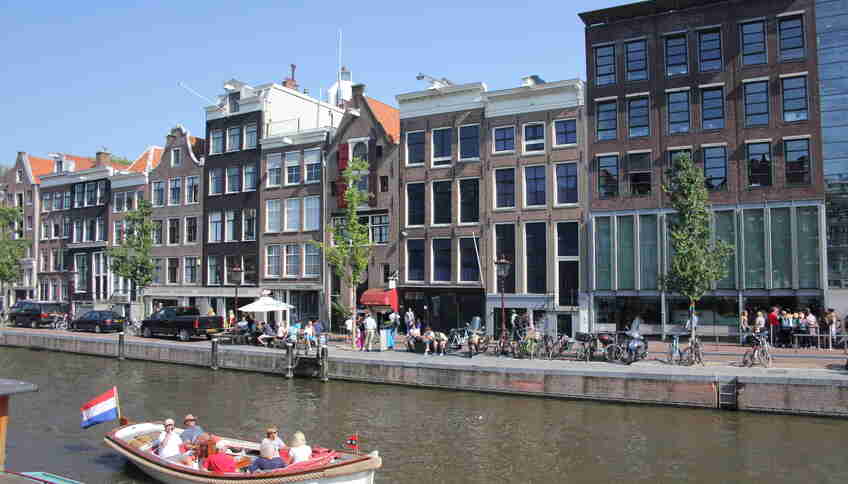

In the center of Amsterdam, among a row of merged buildings, there is one house near which crowds of people always stand. This is the Anne Frank House museum — that very Jewish girl who kept a diary about her life in hiding for two years during the occupation of the Netherlands by the fascists.
Anne had turned 13 when she made her first entry in her diary. It was June 12, 1942. Together with her parents and sister, as well as several other Jews, they hid in the house where Anne's father, Otto Frank, had previously worked. In her entries, the girl addressed an imaginary friend, Kitty, describing to her everything that was happening around them.
Day after day, Anne poured onto paper all her fears, pain, deprivation, and humiliation that she and her loved ones had to face. These letters became a true document testifying to the atrocities of fascism, as well as an indictment that is no longer subject to appeal.
Quite a few films have been made based on these diaries, and for one of them, actress Shelley Winters, who played a supporting role, even received an Oscar. This statuette is now in the Anne Frank House museum in Amsterdam, the same place where the girl's original diaries are kept. By the way, before visiting the museum, many people advise watching films about Anne Frank in order to better understand the value of the preserved legacy.
Here you can see with your own eyes that very hidden door, disguised as a bookcase and serving as the entrance to the shelter. The atmosphere of the Second World War period has been preserved here, as well as many photographs of Anne herself.
It is known from the diary that the girl made her last entry on August 1, 1944. Later, they were discovered and sent to a concentration camp by the fascists. Only Anne's father managed to survive in those inhuman conditions. After his release from Auschwitz, he was given his daughter's diaries.
Later he gave them to the Netherlands State Institute for War Documentation. Back in the spring of 1944, the Minister of Education gave a fiery speech on the radio and asked residents not to burn or throw away any papers that could testify to the suffering of the people at the hands of the fascists, especially diaries. Anne, while still in hiding, also heard this speech. She immediately began editing and putting her notes in order so that she could later hand them over to the authorities. And that is exactly what happened, but unfortunately, only after her death.
The house in which that very shelter was located was bought after the war by a real estate agency. It was assumed that the building would be demolished and a factory would be built in its place. But the residents of Amsterdam managed to save this historically significant site. They spent a long time raising money for its purchase and reconstruction. But subsequently, the agency donated this house to the city. And with the money raised, they bought the neighboring building to make a kind of museum lobby in it, otherwise it simply would not have been able to accommodate all the visitors. The Anne Frank House opened its doors to the general public in 1960.