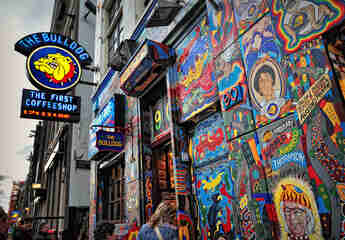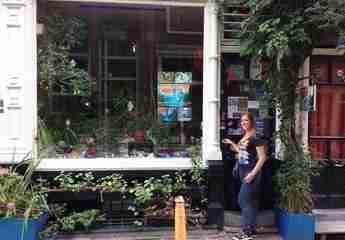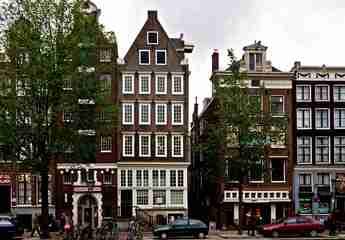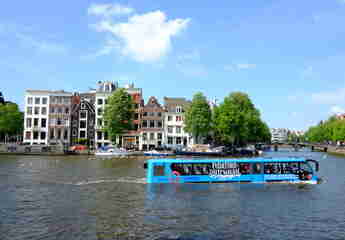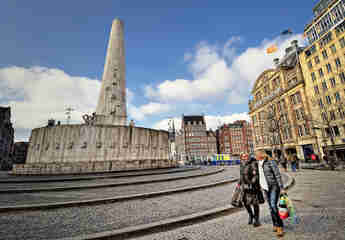
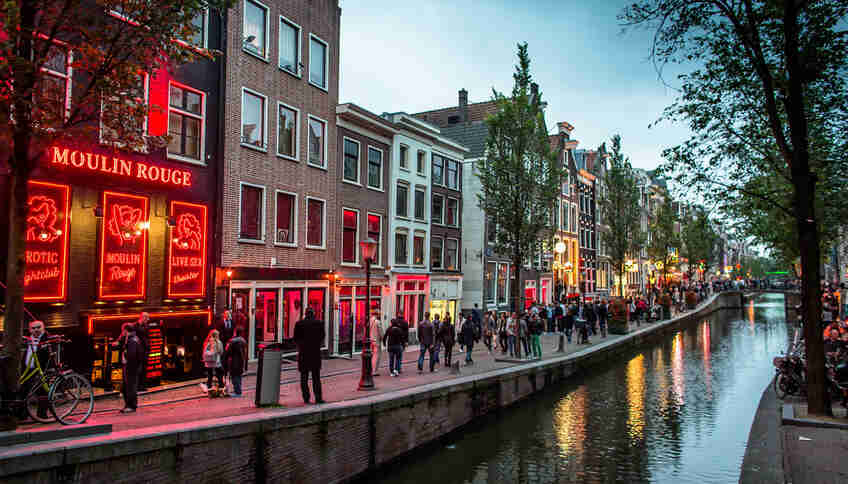

Location: the De Wallen area (Old Center) — between Amsterdam Central Station and Dam Square, around the Oudezijds Voorburgwal and Oudezijds Achterburgwal canals. On foot from Amsterdam Centraal — 5–10 minutes.
How to explore the area: this is one of the city's oldest quarters — houses from the 14th–17th centuries, the medieval Oude Kerk church (1306), narrow streets. The best time for a walk is after sunset, when the famous red neon lights come on.
What to know: photographing people in the windows is strictly prohibited — violations may result in a fine. Special rules of conduct apply in the area: respect for local residents, no large noisy groups. The area is well lit and safe, but at night it is best to stick to the main streets.
“Ladies of the night” in the Red Light District have become as much a part of Amsterdam as colorful tulips, windmills, or soft drugs. The Dutch authorities long ago decided that it is easier to legalize and control than to prohibit and fight.
As a result, walks through the streets of the Red Light District are now included in almost all sightseeing routes. And annual budget revenues from the “horizontal business” amount to more than 100 million dollars.
You can find out what else to see in Kazan by downloading our mobile app – Travel Planner for iPhone and Android. Sights, ready-made walking routes, an offline map, and GPS – everything you need to get to know the city.
It all began back in the Middle Ages, when Amsterdam grew from a small fishing village into a major seaport. Dozens of ships constantly arrived here, and sailors, stepping off the gangway, hurried to spend the money they had earned right away. Therefore gambling establishments, taverns, and brothels flourished in the city. In such an atmosphere, respectable girls became afraid to walk the streets after dark – half-drunk sailors harassed everyone they met. That was when the practice of painting the lanterns that lit the way red appeared, so that it would immediately be clear when a girl was ready to spend the evening in male company.
In the 16th century, the city authorities set aside an entire quarter for intimate services, so that the “priestesses of love” would not roam all over the city and embarrass respectable ladies and gentlemen. Since then, the “ladies of the night” have waited for their clients behind the glass windows of the houses in the Red Light District.
There is an unwritten rule: if the curtains are tightly drawn behind the window, it means the girl is busy. And, by the way, not necessarily a girl; in Amsterdam there are quite a few men who also provide sexual services, and they cost much more. But ladies do not spare the expense on them. You can also meet representatives of non-traditional orientation here – transsexuals, as mentioned in the many leaflets handed out on the streets.
This business became legal in 2000. Like other fields of activity, it is subject to mandatory licensing and taxation. It is even necessary to undergo sanitary inspections periodically – that is, everything is done as it should be. Moreover, there are trade unions created specifically to protect the rights of representatives of the “world's oldest profession”.
Such a democratic approach to such delicate issues has led to the fact that, according to surveys, 78% of Dutch people have long considered prostitution an ordinary job. And indeed, among the “ladies of the night” you can meet not only young beauties, but also quite mature women, even grandmothers. However, none of them became particularly rich by the time they retired; after all, taxes and other deductions take almost half of their income.
However, this is their conscious choice. Here no one forces anyone to sell their body against their will, as evidenced by numerous events like the “Open House Day in the Red Light District”.
Every time you book hotels on Booking.com through our site, you help us describe one more place, create one more route, or develop one more city. Thank you for that!
banner booking