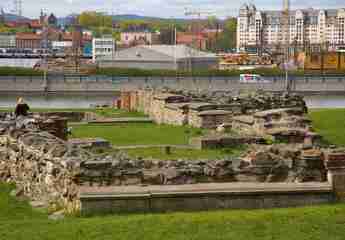
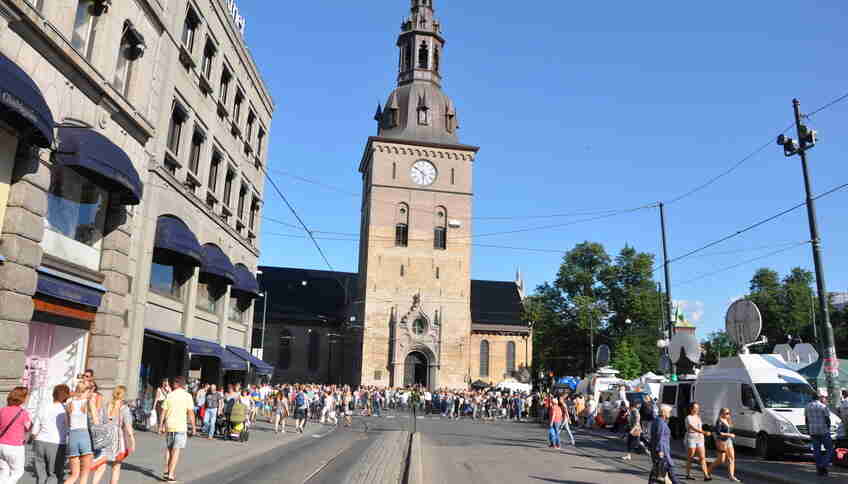
Oslo Cathedral, which stands next to Stortorvet Square, is already the third main church of Norway. The first was built in the 12th century by King Sigurd I and for almost five centuries was the most important church in Norway.
After the great fire of 1624, which almost completely destroyed the capital, King Christian IV decided to move the city several kilometers to the west in order to be closer to Akershus Fortress. By 1639, the construction of the cathedral in the new location was completed, but unfortunately, only half a century later, another fire destroyed it.
A more substantial cathedral building - the one we see today - was constructed at the turn of the 17th and 18th centuries. The majestic cathedral in the Dutch Baroque style was built without elaborate decorations; King Christian V cared more about reliability than artistic refinement.
Over the course of several centuries, the cathedral was repeatedly expanded, with new elements added, for example, the 1718 clock, which today is the oldest church clock in Norway. Also, at the beginning of the 18th century, an organ was installed here, replaced in 1997 with a more modern instrument by Jean Reed - many people come here specifically to listen to its captivating sound.
In the middle of the 19th century, the cathedral was rebuilt and brought into line with the then-fashionable Neo-Gothic style, both outside and inside, completely getting rid of its Baroque heritage.
Another hundred years later, in honor of Oslo's 900th anniversary, the cathedral was restored to its Baroque style, including its interior decoration. The cathedral is known for its stained-glass windows by Emanuel Vigeland and its antique 17th-century altar. In addition, works by 20th-century Norwegian artists are kept here.