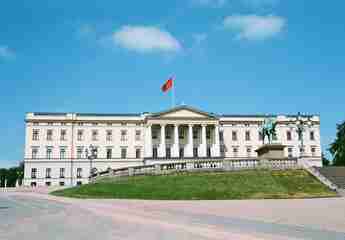
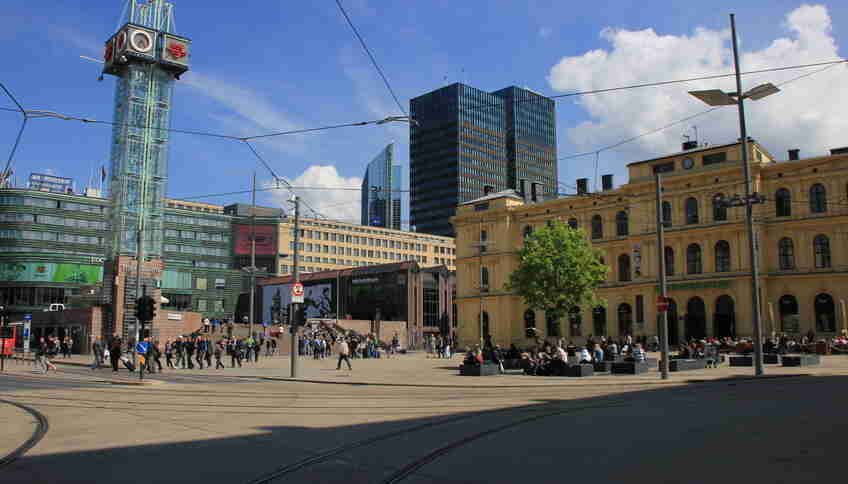
For visitors, any city begins with the railway station and the square around it. Oslo's Station Square, very neat and respectable, is the starting point of the capital's most popular tourist routes. It is here that the main shopping and strolling street, Karl Johans gate, begins, leading to the Royal Palace past a succession of shops and street performers.
If you do not know your way around very well, head straight for the futuristic clock tower with a spiral staircase and black-and-red clocks. At its base is the tourist center, where you can get maps and guidebooks, as well as the information you need.
A gigantic bronze tiger, the symbol of Norway's capital, stands guard over order in the station square. The obvious question of how a tiger became the symbol of Oslo, where tigers have never roamed, is answered by a poetic legend. Bjornstjerne Bjornson, the first Nobel Prize laureate in literature and the author of the national anthem, once wrote a poem in which he compared the city (Oslo) to a tiger, contrasting it with a horse symbolizing the countryside.
It is unknown why the Norwegians so eagerly latched on to this comparison and made the tiger the symbol of Oslo, but it is a done deal. Local residents love the tiger, as is evident from the fangs polished to a shine—apparently this is a good omen, so just in case, rub the beast's fangs as well.