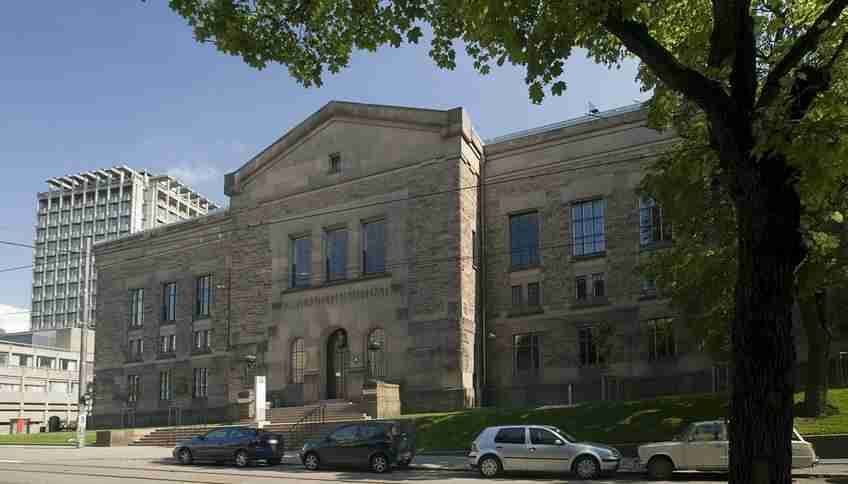
The national library in Norway opened in 1988. Before that, the country's main library was the University of Oslo Library.
The Norwegian Parliament voted to create a national library, and a decision was made to reorganize the university's book holdings. In fact, this turned out to be more of a formality, since the books did not even have to be moved, because the national library was housed in the building of the former university library.
In addition to the main building in central Oslo, which is housed in a historic classical building, there is another library branch in the capital.
More interesting is the second branch of the Norwegian National Library, which is located north of the Arctic Circle, in the city of Mo i Rana. At first glance, why would the small number of people living in the far north need an entire national library? The answer is quite prosaic - scientists concluded that printed publications would be preserved much better in a dry, freezing climate. Of course, the building could simply be equipped with special technology to maintain temperature and humidity levels, but why do that if nature itself has already offered an original solution to the problem.
At the Arctic branch, however, no one is upset by the small number of visitors, as the local staff have another priority task - to digitize the printed book collection.
Management plans to create a free online electronic library for which all the books stored here will be digitized - even antique folios. Such a modern and altruistic approach to library work undoubtedly deserves respect and admiration.
A mandatory copy of every publication printed in Norway is sent to the Norwegian National Library. Thus, an institution that has existed for less than 30 years has already amassed about three million publications.