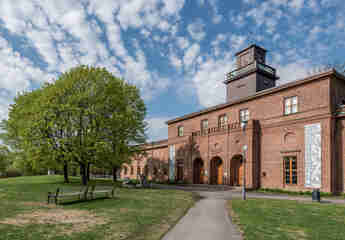
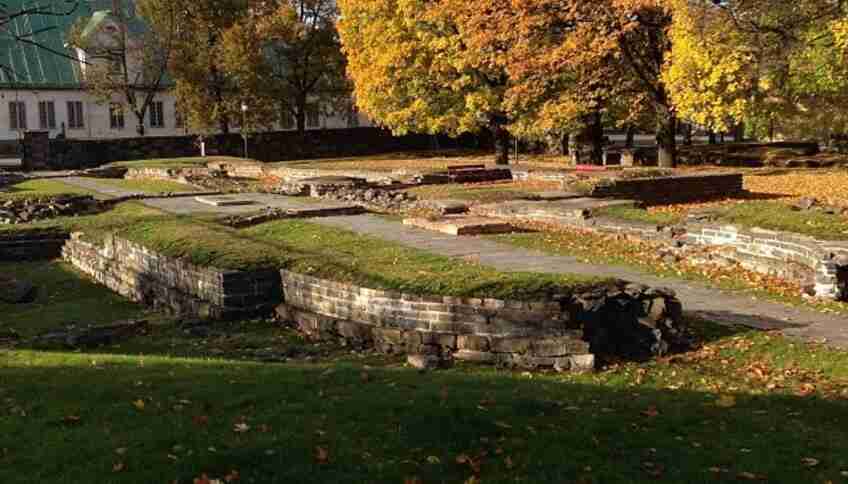
Memorial Park in Oslo is also called the Ruins Park, because the main attraction of this quiet and melancholic place is the ruins of the oldest churches on the territory of the present-day capital. Once part of the medieval city, the park has preserved the remains of the most important historical buildings. Some of the ruins date back to the beginning of the second millennium AD.
Oslo was founded in 1048 by the Viking king Harald III Sigurdsson. The earliest settlements in these places were discovered during excavations precisely in the area of Bispegata Street, which adjoins Memorial Park. Most of the ruins were discovered during archaeological excavations that began in 1872 and ended only in 1922.
Architect and archaeologist Gerhard Fischer, who worked on the final stage of the excavations, developed the plan for Memorial Park, according to which the signs that help visitors navigate the ruins are now placed.
Here you can see the foundation of Oslo's first cathedral - Saint Hallvard Cathedral, built in the XII century on a busy market square. In this cathedral, the kings and queens of Norway were crowned, married, and baptized for about 5 centuries, and pilgrims from all over Scandinavia also came here. The cathedral existed until 1655, and the exact reason for its fall is unknown.
Other piles of ancient stones were once St. Olaf Monastery, built in 1239, and the Church of the Holy Cross, built around the XIII century. The ruins of St. Olaf's Monastery are now being reconstructed and promise to become an interesting attraction.