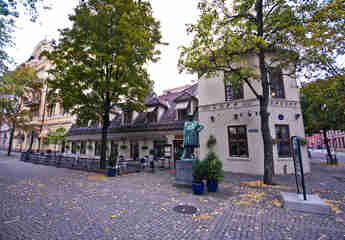
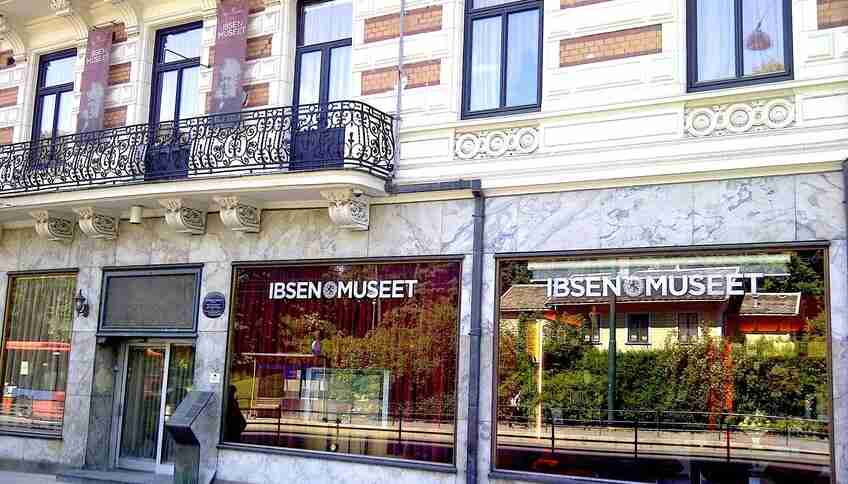
Not far from the Royal Palace there is a modest house museum dedicated to one of the most outstanding Norwegians - Henrik Ibsen.
Ibsen, a descendant of a ruined merchant family, became the founder of his own school of dramaturgy - the “new drama,” within which such geniuses as Anton Chekhov and Bernard Shaw worked. For more than 100 years now, Ibsen's plays have been staged on the world's best theater stages, and great actors consider it an honor to play the characters created by the writer's imagination.
The idea of organizing a museum in the house where the dramatist lived the last 11 years of his life belongs to the actor Knut Wigert. Unfortunately, after the death of Henrik Ibsen's wife Suzannah, their home stood empty and was effectively plundered - the writer's extensive library, antique furniture, and valuables were dispersed among various museums and private collections.
The creators of the Ibsen Museum did enormous work, painstakingly collecting information about the interior of the house during the writer's lifetime, obtaining his personal belongings and furnishings. The Norwegian Folk Museum gave some of its exhibits to the house museum, and many rare and especially valuable personal items were received from the writer's great-grandson Tancred Ibsen.
The restorers recreated the original furniture, curtains, and wallpaper, and laid out the clothes, toiletries, and stationery where they had been during Ibsen's lifetime. Now everything in the house looks as if its owner has stepped out for a moment to get a fresh newspaper and is about to return, sit down at his desk, and continue working on yet another play.