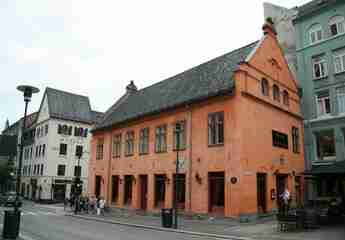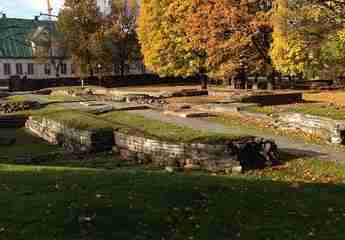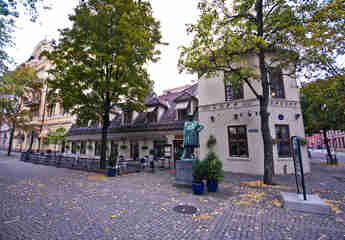
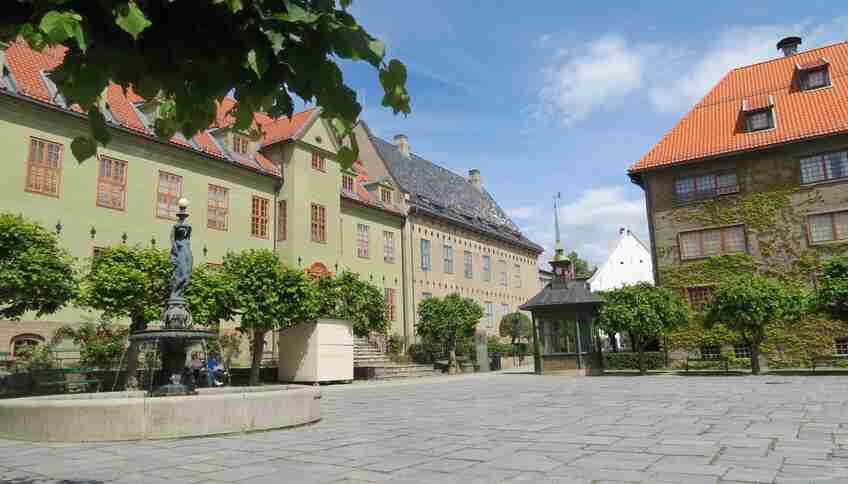
You can travel back, as if in a time machine, several centuries and see how the rugged Norwegian people lived and what their lives were like at the open-air museum on the Бюгдой Peninsula. Here, amid the stunning beauty of untouched nature, an entire village has spread out, bringing together more than 150 original architectural structures from different eras of Norway's history.
The ethnographic museum was founded in 1894 on a 14-hectare site. Since then, the collection has been constantly replenished with unique exhibits, some of which are already more than 700 years old. You will see, for example, Gol stavkirke - the oldest frame church in Norway, wooden buildings with grass growing on the roofs, craft workshops, and living quarters.
In addition to very old archaic houses, more modern structures are also presented here, demonstrating the lifestyle of postwar Norway. The value of the museum lies in the fact that the exhibition covers not only all periods of history, but also reflects the living conditions of different social classes and groups of the population.
In addition to architectural monuments, more than 200 thousand authentic household items are kept here. The original interiors have been preserved inside the buildings, and visitors are greeted by guides in national costumes.