
This walking route is a continuation of the walk around the Vatican. We will go from Castel Sant'Angelo, through Piazza Navona to the Pantheon, and then to the Trevi Fountain. We will stroll at a leisurely pace, sip coffee in small cafes, and visit Castel Sant'Angelo and the Pantheon.
If you still have time and energy after this walk, you can continue the route with a walk through the Roman Ghetto and the Trastevere district or head toward the Imperial Forums and the Colosseum.
We would like to remind you that this route is part of our mobile app - Travel Planner and Guide for iPhone and Android. By downloading it, you can not only use this route, offline maps, and GPS, but also plan your entire trip to Rome. So, let's go!
Castel Sant'Angelo

Start your walk from the Ottaviano metro station, passing by the Vatican and St. Peter's Basilica. Then follow Via della Conciliazione to Castel Sant'Angelo. Notice the parallel street Via dei Corridori - it runs along the secret passage connecting the castle to the Vatican. During sieges, the popes used the corridor to escape from the Vatican and take shelter in the better-protected fortress.

Alina Kovalevich
Originally, the castle was the mausoleum of the Roman Emperor Hadrian. Over time, the mausoleum's proximity to the Vatican and the fortress-like nature of the building saved it from destruction and turned it into a fortress and refuge for the Roman popes. Visiting this castle is definitely worth your time; keep in mind that its summit offers an excellent panoramic view of Rome. And now we cross the Tiber to the other side via Ponte Sant'Angelo.
Thank you! Every time you book hotels on Booking.com through our site, you help us describe one more place, put together one more route, or develop one more city. Thank you for that!
banner booking
Ponte Sant'Angelo

Piazza Navona

Piazza Navona is always full of tourists, especially on a warm, sunny day. This place is very popular with artists and resembles an open-air exhibition. Here you can buy anything from caricatures and watercolor drawings to landscapes painted in ink, pencil, or oil. Not Raphael, of course, but some of the works would fit perfectly into a home interior.
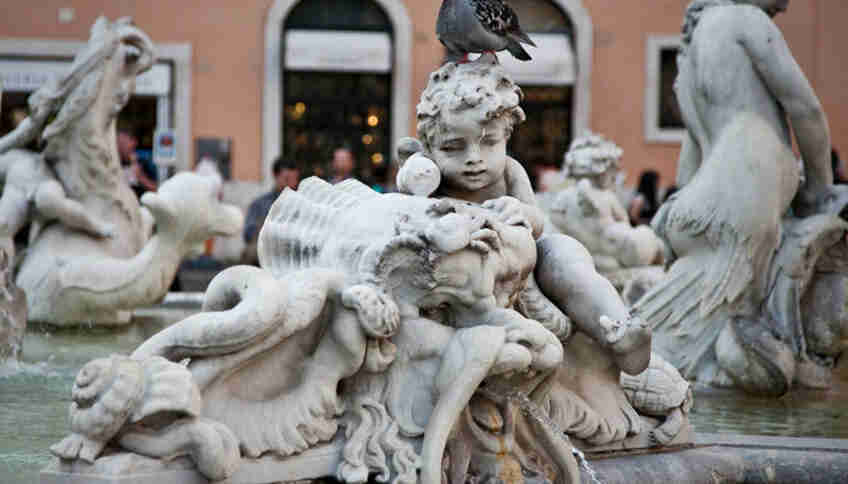
Interestingly, the elliptical shape of the square repeats the shape of a Roman stadium. Read more about Piazza Navona in our separate article. Among the interesting sights are the famous Fountain of the Four Rivers and the Church of Saint Agnes. In the 16th century, serious passions flared up around them. Two Roman architects were involved: fate's favorite Bernini and the self-made man Borromini. Read in our article about Piazza Navona. how this intrigue was reflected in the architecture of the church and the composition of the fountains.
Pantheon

To get to the Pantheon, follow the map. Explaining the way is practically impossible. It is precisely here that all the streets start to twist around so much that even GPS goes crazy.
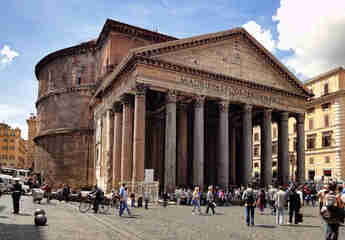
By the way, near the Pantheon you can sit down and have a cup of espresso; there are many cafes here with an excellent view of the square. The more carefree people take seats by the small monument in the center of the square and crunch away on baguettes appetizingly.
For those who did not know, the Pantheon is an iconic architectural and engineering monument of antiquity. Architects tried for centuries to reproduce the size of the Pantheon's dome. If you go inside the building, notice the absence of any supports. It is, without question, an engineering masterpiece. And here you can learn more about the Pantheon.
Trevi Fountain

Having regained our strength and drunk some coffee, we head to the Trevi Fountain. There are always lots of people here and little space. The fountain itself seems to be built into the facade of Palazzo Poli, where, incidentally, the Russian society lady Countess Volkonskaya once held a literary salon.
It is customary to throw coins into the fountain in the hope of returning here again. There have been cases when some particularly creative fellows poured shampoo and blood-red paint into the fountain. It looked interesting, but for the fountain, as an old and important monument, it was not exactly very good. And then, the offenders are quickly identified and heavily fined, so we recommend not fooling around :)
Federico Fellini's film "La Dolce Vita" secured eternal fame for the Trevi Fountain
Photo by Evgeniya Tsvankina and Alina Kovalevich