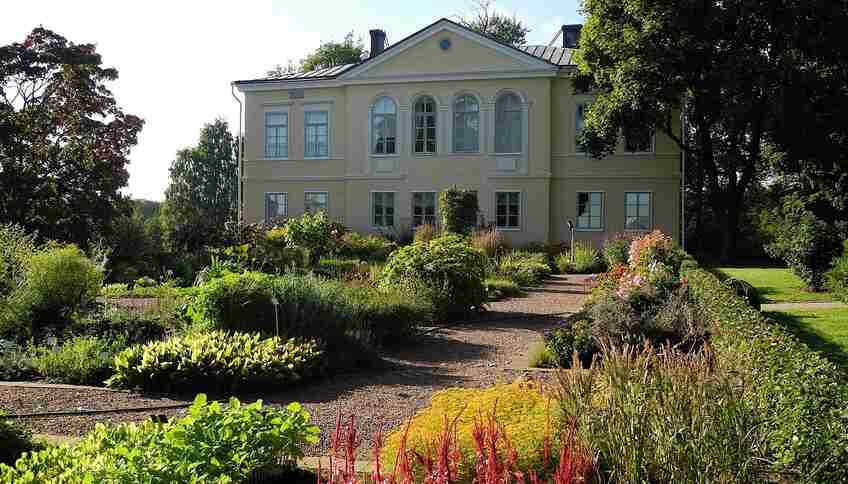
This botanical garden is a department of the Museum of Natural History at the University of Helsinki.
Back in the days of Swedish rule over these lands, 'Kumpula' was a wealthy private estate. The mansion built in the 15th century was named after the neighboring village – Kumtähti. The extensive grounds changed hands many times, and among their owners was the family of Per Forsskål, the father of Finnish botany. Surely he could not have imagined that 250 years later, on the site of the private park, a beautiful botanical garden would appear where students would study plants from all over the world.
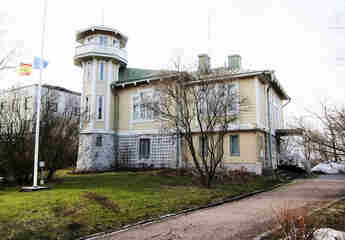
Another of the owners, von Bonsdorff, built in 1844 the buildings that still adorn the park today. In 1893, all the estate lands were purchased by the city authorities. One of those buildings housed a venereal disease hospital until 1960, and then a public school. Today, the old buildings house the Faculty of Natural Sciences and the administration of the botanical garden.
The latter began to develop in 1980, and at that time it had only two thematic zones – the garden of cultivated plants and the geobotanical garden. In the first, you will learn about the origin of paper, resins, glue, rubber, dyes, flavorings, and many other plant-based products.
The geobotanical garden offers a journey across different continents: all the plants here are planted in groups according to their origin: different parts of America, Europe, the Far East, Japan. Special attention is paid to the flora of Finland. And the most popular section of the garden is considered to be the old rose park, one of the largest in Europe.