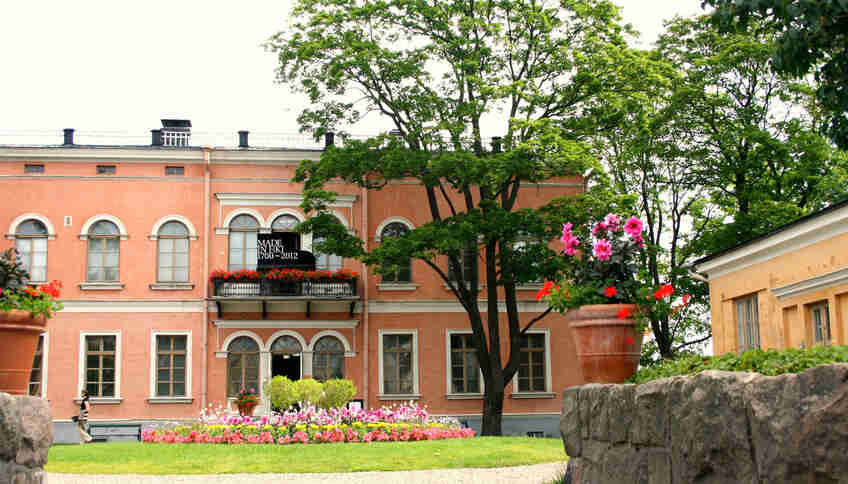
One of the branches of the Helsinki City Museum is Hakasalmi Villa – an architectural attraction in its own right, now used as exhibition space.
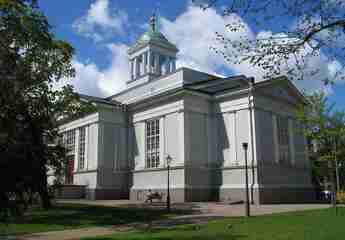
It was built in 1843 for Prosecutor and Privy Councillor Karl Johan Walleen. The Berlin architect Lormann was given the task of bringing a rural lifestyle into the city limits, that is, to build a country home for the Walleen family right in Helsinki. The building was surrounded by a neat English garden, and in 1847 two wings were added – for a bakery and a greenhouse. The result was a rather idyllic two-story "little house in the country."
For a long time, Walleen's stepdaughter Aurora Karamzin lived at the villa – a lady-in-waiting to the Russian Empress who moved to Helsinki from St. Petersburg. In 1896 the city bought the mansion from her, but Aurora remained living on the now former estate until her death in 1902.
From 1906 to 1911, the villa hosted exhibitions of the Historical Museum; later, until 1929, the upper floor was occupied by the Museum of Applied Arts, and subsequently the entire building came under the ownership of the Helsinki City Museum.
Today Hakasalmi Villa, known in the 19th century as a venue for lavish balls and parties, is actively used as a museum, where exhibitions dedicated to the city's history from 1850 to the present day are held.