Similar museums also operate in two other German cities - Weimar and Konigsberg, but it was in Frankfurt am Main that the famous poet, thinker, and political figure Johann Wolfgang von Goethe was born and spent his childhood and youth.
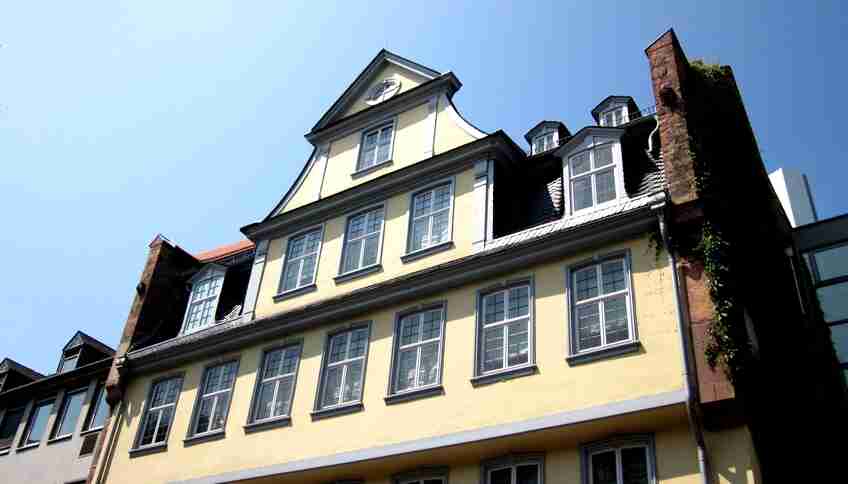
The Goethe House Museum was one of the oldest buildings in the city, but now we can see only a carefully restored replica: in 1944, as a result of bombing, it was destroyed to the ground along with the entire street.
The XVIII-century Frankfurt house belongs to the late Baroque style, and with its pointed roof, colorful facade, and abundance of windows, it looks very much like a gingerbread house.
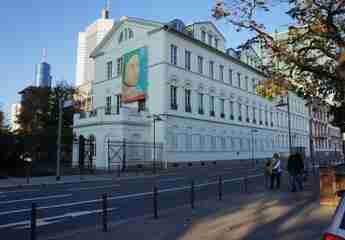
In the XIX century, one of the residents of the house had the brilliant idea of commemorating the fact that in 1749 little Johann was born within these modest walls. The authorities supported the public initiative, archives were consulted, and the interior of the building was restored. Books, paintings, furniture - everything became as it was then. Initially, the museum occupied the second floor, but over time it expanded into two buildings: the Goethe House and the Goethe Museum.
At the entrance, the poet's house greets its visitors with the goddess of justice on a carved stove. In Goethe's private study, there is a desk at which he worked on his famous works. In particular, it was here that the first sketches of "Faust" were made.
On one of the walls hangs a portrait of Charlotte Buff, who became the prototype for Lotte in the novel "The Sorrows of Young Werther." Having met her at a dance evening, the poet was captivated by this girl, but later she became another man's wife and a mother of many children. Here you can also see Goethe's authentic autograph, his astronomical clock, and a puppet theater. The second exhibition - the museum - is an art gallery of the poet's era.