
Bogolyubovo

olgino.info, Butch
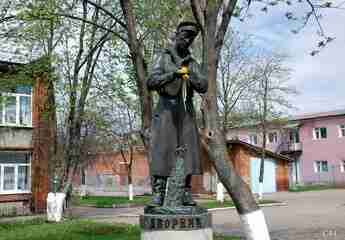
Bogolyubovo is a settlement in Russia, in the Suzdal district of Vladimir Oblast. The center of the Bogolyubovo rural settlement.The settlement is included in the list of Russia's historical towns.Bogolyubovo is located at the mouth of the Nerl River (where the Nerl flows into the Klyazma), 2 km northeast of Vladimir.
Bogolyubsky Monastery

veles-tour.ru
Bogolyubsky Monastery in honor of the appearance of the Bogolyubovo Icon of the Mother of God (Nativity of the Mother of God) is the name of an Orthodox monastery (in the settlement of Bogolyubovo in the Suzdal district of Vladimir Oblast (the Vladimir diocese of the Russian Orthodox Church). It occupies the territory of Andrei Bogolyubsky's palace-castle, the only residential building of Ancient Rus of which any fragments have survived.Around 1158, the Vladimir-Suzdal prince Andrei Yuryevich Bogolyubsky (the second son of the Rostov-Suzdal prince Yuri Vladimirovich Dolgoruky) founded here a country residence, the "stone town" of Bogolyubovo, where he also erected a church in honor of the Nativity of the Mother of God. Later sources explained the choice of the place by the will of the Mother of God, either through the Vladimir Icon or through Her appearance to Prince Andrei.The ensemble of the princely residence included, besides churches, a two-story stone palace and a stone ciborium; the castle was enclosed by stone walls.
Church of the Intercession on the Nerl

Mikhail Vorobyev, mb_world.livejournal.com
The Church of the Intercession on the Nerl (Pokrov on the Nerl) is a white-stone church in Vladimir Oblast, Russia, one and a half kilometers from Bogolyubovo, an outstanding monument of the Vladimir-Suzdal school of architecture.The traditional dating of the church according to N. N. Voronin is 1165, based on the Life of Andrei Bogolyubsky, which states that the Church of the Intercession was built in memory of the deceased son of the grand prince, Izyaslav Andreyevich. Modern researchers S. V. Zagraevsky and T. P. Timofeeva, on the basis of chronicle information, substantiate an earlier date for the church, 1158.According to the Laurentian Chronicle, construction under Prince Andrei was carried out by "masters from all lands." Tatishchev clarifies in "Russian History" that "the masters were sent by Emperor Frederick the First, with whom Andrei was on friendly terms..." (meaning Frederick Barbarossa).The church was consecrated in honor of the Feast of the Intercession of the Mother of God, established in Rus in the middle of the 12th century on the initiative of Andrei Bogolyubsky.