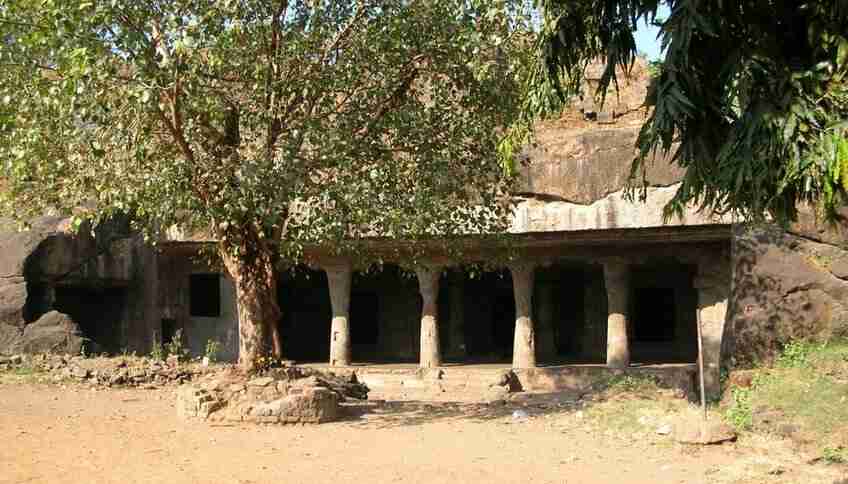
Here you can see an amazing eclectic blend of different religious influences. Apparently, in the 5th-6th centuries AD, when one of the oldest temple complexes in India was created, differences in beliefs were not so important, for the Mandapeshwar caves were carved into the rock by Buddhist monks, their walls were painted by Persian artists whose religion was Zoroastrianism, and the main subject of the paintings is the life of the Hindu god Shiva.
The original name of the cave temple, "Mandap Pe Eshwar," literally translates as "Hall of God's Painting," which can more logically be rendered as "Hall of Images of God." Not only paintings decorate the cave walls; stone carving and numerous statues depicting scenes from the lives of the gods have been preserved much better.
Archaeological excavations are still being carried out in the Mandapeshwar caves today, and scientific expeditions come here from all over the world, so it can be said with confidence that not all the mysteries of the temple, which is one and a half thousand years old, are known to people today.
In addition to the blending of ancient religions inside the underground temple, on the hill above them there are also the ruins of an ancient Catholic cathedral built by the Portuguese in the 17th century. Excavations and research are also being carried out at this site.