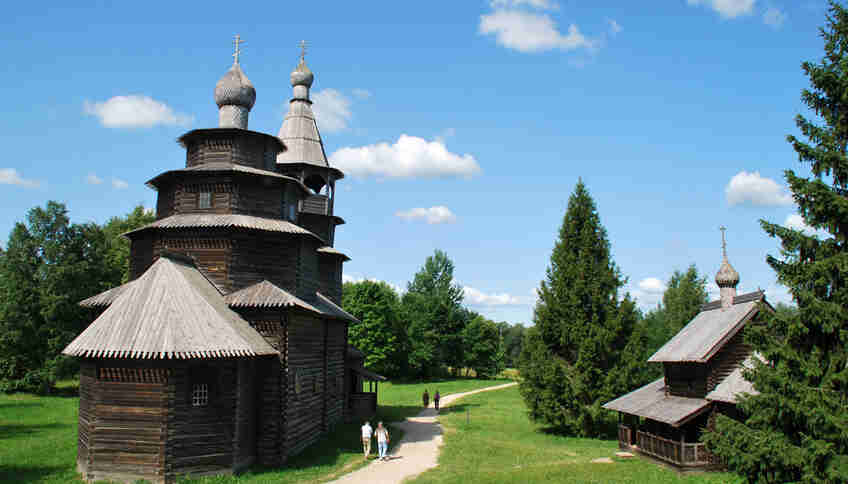
Museum of Folk Wooden Architecture «Vitoslavlitsy»

foto.awd.ru, Gerasimoff
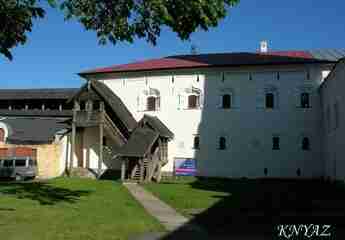
Vitoslavlitsy is the Novgorod Museum of Folk Wooden Architecture, located near the Yuriev men's monastery several kilometers from Veliky Novgorod, on the southern shore of Lake Myachino. The name «Vitoslavlitsy» comes from the village of Vitoslavlitsy, which existed here in the XII—XVIII centuries. The village has been known since the beginning of the XII century. Around 1187 the village was transferred by the Novgorod prince Iziaslav Mstislavich to his brother. In 1207 it became a monastic settlement attached to the Panteleimon Monastery. In the first half of the XIX century Countess A. A. Orlova-Chesmenskaya settled here; her house, built to a design by architect Rossi, has survived.
Yuriev Monastery

Flickr, kylepounds2001
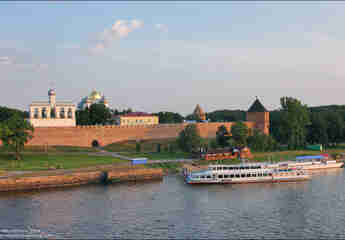
Yuriev Monastery is one of the oldest monasteries in Russia. In the past it was the spiritual center of the Novgorod Republic; today it is an active men's monastery of the Russian Orthodox Church. It is located in 5 km from Veliky Novgorod on the bank of the Volkhov River near Lake Ilmen. Until 1918 it had the status of a 1-class monastery. According to legend, it was founded in 1030 by Prince Yaroslav the Wise. In holy baptism Yaroslav Vladimirovich bore the name Georgy; in Russian the latter usually had the form «Yury», which is where the monastery's name came from. The first chronicle mention dates to 1119. The monastery buildings were originally wooden, as was its cathedral church of St. George. In 1119, by order of Prince Mstislav the Great, a stone church was laid — St. George's Cathedral, built by Master Peter, the first Russian architect whose name is mentioned in the chronicles. In 1125 Mstislav inherited the Kievan throne. Having already become grand prince, he married the daughter of a Novgorod posadnik.
Rurikovo Gorodishche

old-land.ru
Rurikovo Gorodishche (Gorodishche) is a trade-and-craft and military-administrative center of the Ilmen region, a hillfort, and an archaeological monument of the IX century, located in Veliky Novgorod 2 km south of the city center, at the source of the Volkhov River from Lake Ilmen (opposite Yuriev Monastery). It is known, among other things, as the residence of the Novgorod princes, with which many names of famous political figures of Ancient Rus are associated. Until the XIX century, the tract, like the adjacent village, was called simply Gorodishche. The word Rurikovo was added at the beginning of the XIX century, under the influence of legends identifying this place with the capital of Rurik's state after the calling of the Varangians. The basis for such a connection is one interpretation of the Tale of Bygone Years about the invitation by the Novgorodians (in another reading of the Tale of Bygone Years, this entry is also attributed to Ladoga) of Prince Rurik in 862, which serves as the reason and starting date for the legendary appearance of the princely residence at Gorodishche.
Church of the Savior on Nereditsa

photoline.ru
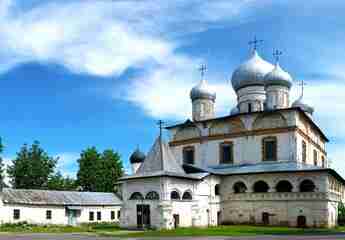
The Church of the Savior on Nereditsa (Spas on Nereditsa Hill, Spas-Nereditsa) is a Church of the Transfiguration of the Lord, located 1,5 km south of Veliky Novgorod on the right bank of the former channel of the Maly Volkhovets, on a small rise next to Rurikovo Gorodishche. It was built in a single season around 1198 under the Novgorod prince Yaroslav Vladimirovich in memory of his two deceased sons. The church is single-domed, of cubic type, four-pillared, and three-apsed. The fresco paintings occupied the entire surface of the walls and represented one of the unique and most significant pictorial ensembles in Russia. The paintings were actively studied and described from the beginning of the century to the 30s of the XX century. Watercolor copies of the Nereditsa frescoes, made in 1862 by the artist N. A. Martynov, were shown in 1867 at the World Exhibition in Paris and earned a bronze medal. At Gorodishche around the church there existed the Spaso-Nereditsky, or Spas on Gorodishche, men's monastery (assigned to Yuriev Monastery).