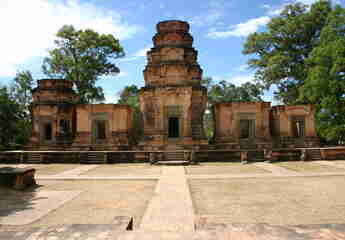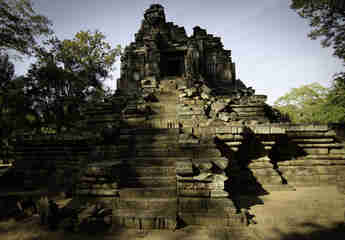
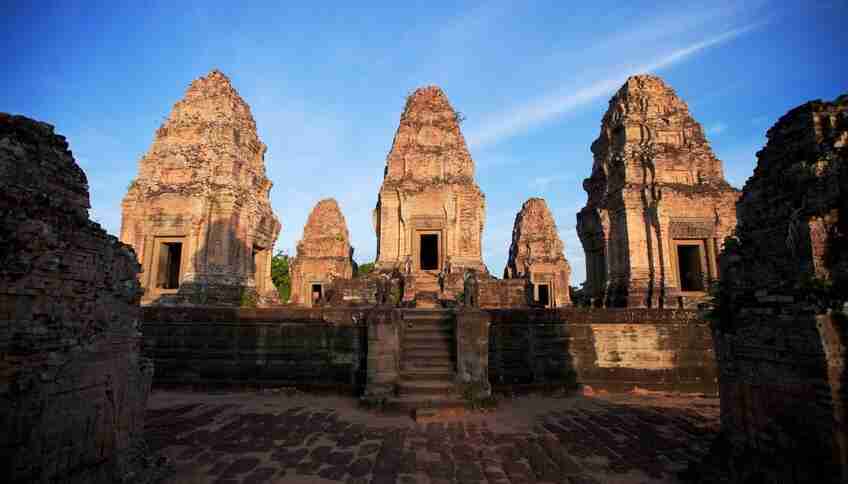
At first glance, it may seem that East Mebon was built as a temple-mountain. In fact, the elevation on which it now stands used to be completely hidden under water. In other words, the temple was surrounded on all sides by reservoirs, like an island, which were then called barays. And, by the way, East Baray was considered the largest, since its dimensions were approximately 7*2 km. The depth reached 5 m, so the total capacity of fresh water was quite impressive - around 60 million cubic meters. This reserve was quite enough for the inhabitants of Angkor to grow rice in the reservoir even in the driest years. Now only the walls of the baray remain; the water in it dried up long ago.
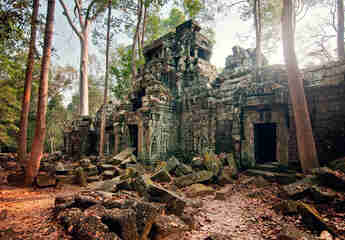
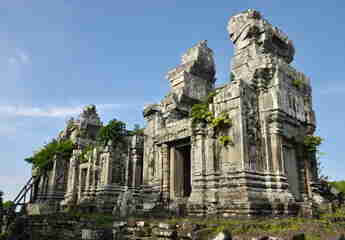
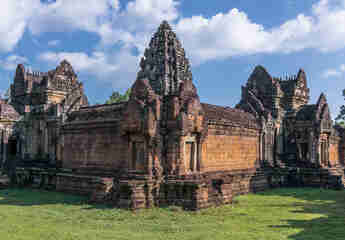
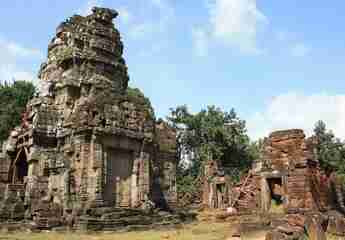
All the buildings of East Mebon Temple have been preserved quite well, although it was built back in the 10th century. On many walls, you can still see ancient bas-reliefs depicting gods, as well as inscriptions on the stones. The main entrance to the temple, just as hundreds of years ago, is guarded by stone lions. And at the corners of the platform of the inner courtyard stand large elephant figures facing different cardinal directions. In general, elephants are quite common in Hindu temples, but these sculptures are considered very rare, because all the details of their harness are depicted with particular care.