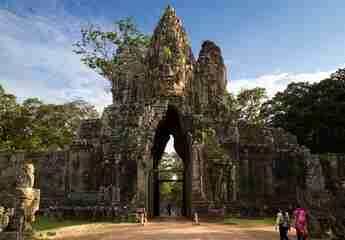
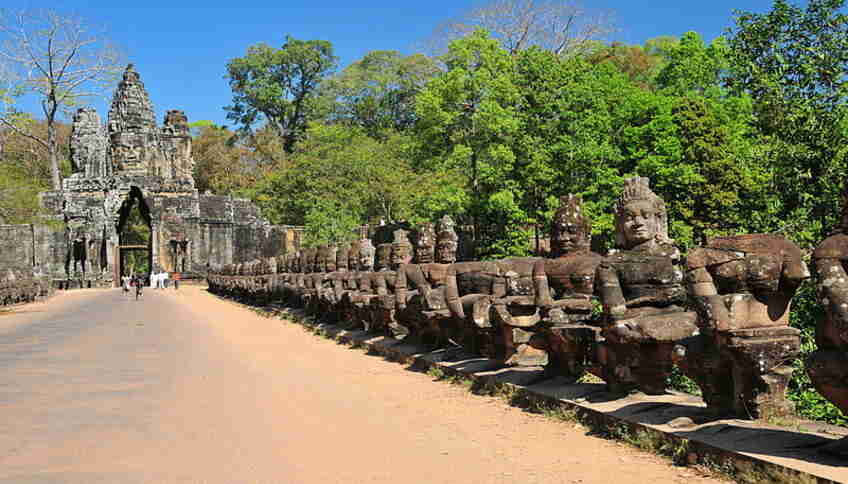
The approach to the South Gate runs along a bridge over the moat, which is 100 meters long and about 6 meters deep. Along the bridge stand figures of devas and asuras pulling a seven-headed serpent (Naga) - a scene from one of the key events in Hindu mythology - the Churning of the Ocean of Milk. It symbolizes the unity and struggle of opposites. Overall, this sculptural composition forms graceful, decorative railings on both sides of the bridge.
Note: the gods (devas) are depicted with smiling faces, while the asuras (demonic demigods) have fearsome grimaces and military headdresses. Some statues have already been restored, so they look almost new.
There are 108 of them in total, with 54 figures on each side. The number 108 was not chosen by chance. This very number is considered a universal cosmic constant. It appears in many temples and monuments of Angkor and is generally recognized as a mystical number in many religions and cultures. In particular, prayer beads consist of 108 beads, Hindu deities have 108 names, 108 sins are known in Buddhism, there are 108 poses (asanas) in therapeutic hatha yoga, and 108 acupuncture points in Chinese medicine…