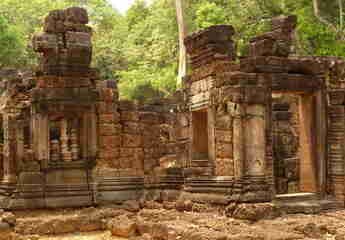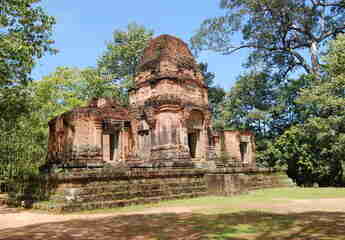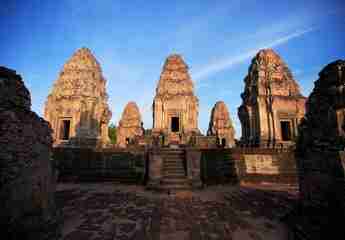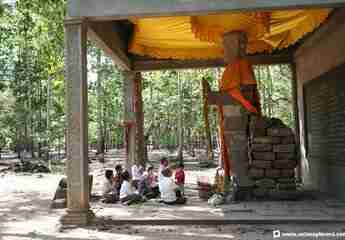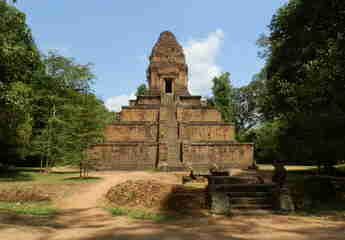
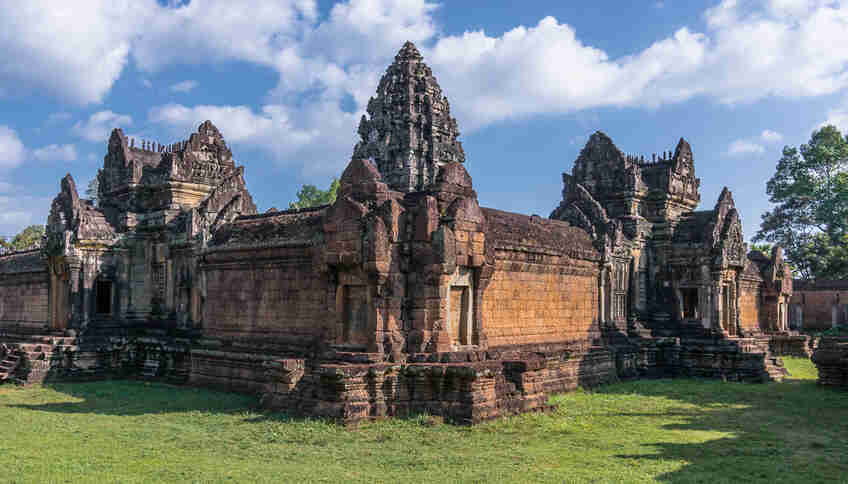
Standing a little apart from the others is Banteay Samre Temple. In translation, its name means "Citadel of Samre," that is, the fortress of the people who lived here in the XII century. It was precisely at this time that the temple was built.
Quite a few legends were told about this "citadel." One of them is about sweet cucumbers. Once there lived a poor peasant who somehow managed to grow sweet and juicy cucumbers unlike any that had existed before. He treated the king to them, and the king was so amazed that he immediately claimed them as his own and ordered the peasant to kill anyone who dared to encroach on his cucumbers.
One night, the king so wanted to taste the juicy fruits again that, without waiting until morning, he went to the field. The peasant did not recognize him in the darkness and killed him, thinking that someone was trying to steal the cucumbers. To hide what he had done, the poor man had to bury the king right there in the field. And then, by the will of fate (let us omit some details), he himself became king.
However, the ministers close to the court were unhappy about this and did not respect the new king — why would they? No longer wishing to endure their insolence, the new sovereign withdrew to that very Citadel with which we began this story and started summoning the ministers to him one by one. In short, no one ever saw them again — the king rid himself of the ill-wishers and began to rule surrounded exclusively by supporters.
When Banteay Samre was discovered in the jungle by our contemporaries, it had been completely "swallowed" by nature. Tree roots twisted all around, and the walls were overgrown with lush vegetation. That is why the restoration of the building was carried out gradually, dividing it into sections and removing the plants from each of them one by one. As a result, Banteay Samre now looks better than many other temples of Angkor.