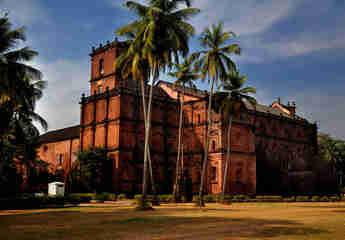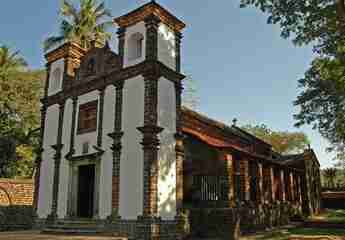
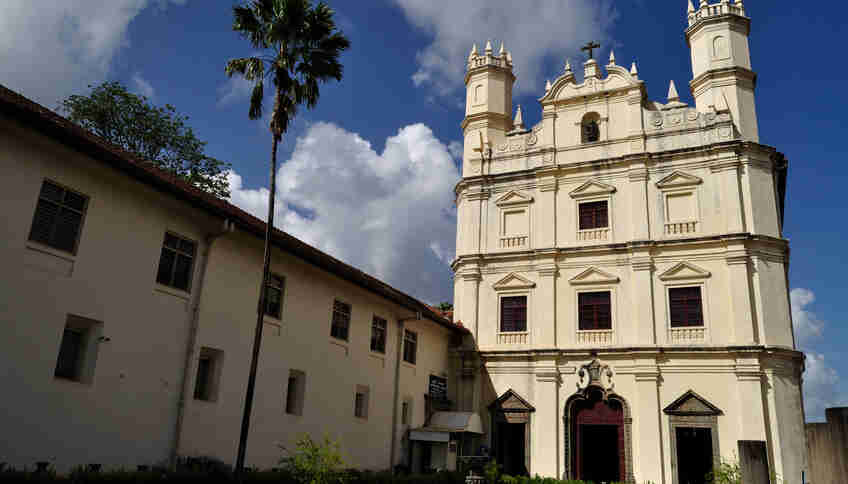
The church building that has survived to this day was built in 1661. For a long time, a monastery operated here, but about 180 years ago it was closed, and the premises were given over to an archaeological museum.
Previously, another church stood on the site of the temple, erected in honor of the Holy Spirit. It was built by monks who arrived here at the very beginning of the 16th century. The governor responded to the missionaries' request and provided them with several premises for religious activities.
In four years, the monks built the church on their own. After some time it was demolished, but in the same place, about a century and a half later, a new one appeared.
The building material was laterite bricks - essentially, this is a special local soil from which rocks have weathered away. The walls are whitewashed on top. The pilasters (semi-columns) and the style of the entrance refer us to the Portuguese tradition.
The Baroque style found its reflection in the architecture of the main altar. Two large statues are installed here: St. Francis of Assisi and the crucified Jesus. Large wooden panels on both sides of it tell about events from the saint's life.
Overall, the building is a series of huge halls connected to each other by confusing corridors. Meanwhile, this is one of the most beautiful sights of Goa. The traditions of Indian architecture are reflected in the floral ornament.