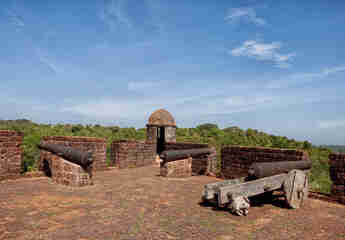
One of the largest Portuguese forts in India was built by an Italian architect in 1612. Along its perimeter, 79 cannons were permanently stationed, and in battle up to two hundred were installed.
Fort Aguada was built as a fortress protecting the territory from the Dutch and the Marathas. It has a very advantageous location: erected on a peninsula, it provided a panoramic view of the approaches both from the sea and from the land.
Aguada means "water." The name is due not even to the location of the defensive structure at the mouth of the Mandovi River, but to its secondary strategic purpose - it housed a large store of drinking water. Sailors stocked up here before setting off on long voyages. The water reservoir was replenished by natural springs, which still function today.
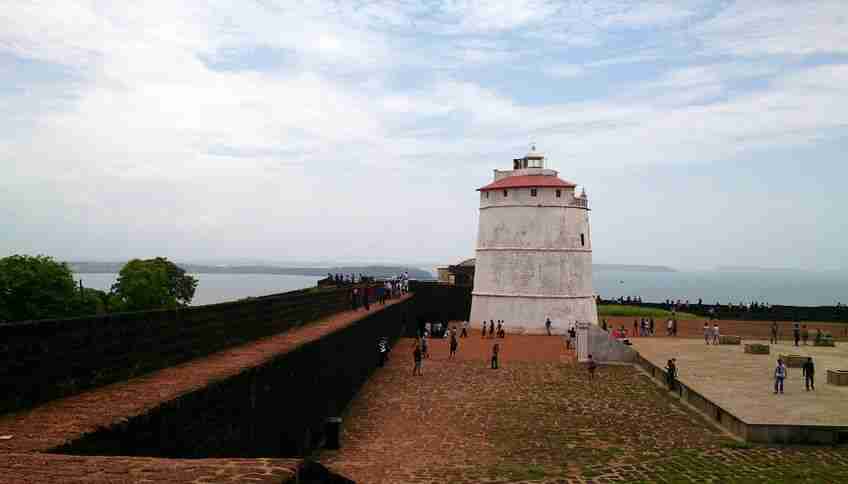
The fortress was divided into two parts, connected to each other by passages - above ground and below it. Both were surrounded by another wall with towers, now in ruins.
250 years after the fort was built, a lighthouse appeared here, which is considered the oldest in Asia. It operated until the 1980s. A more modern version, located next to the former one, is now used.
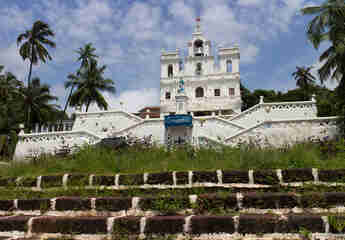
Inside the fort, the Church of Our Lady and a monument honoring the struggle for India's freedom have been preserved. Some parts of the historic site are still in use today: for example, there is an operating prison here.