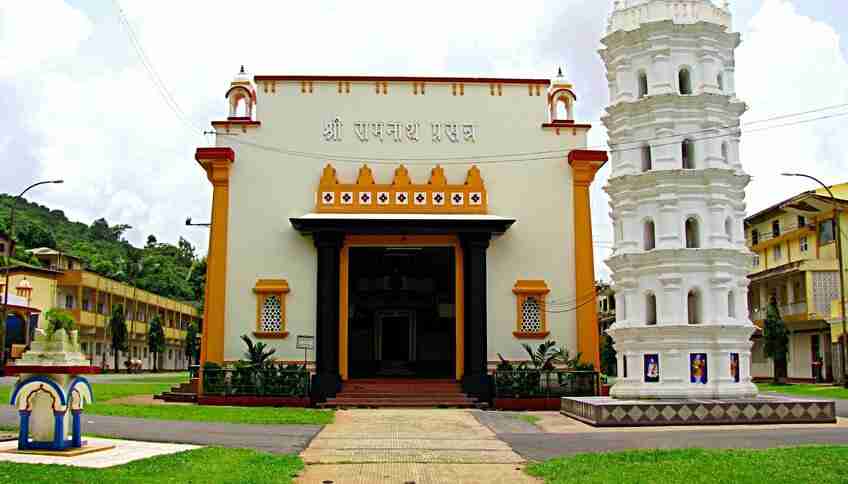
This Hindu temple is dedicated to the incarnation of Vishnu - the god Rama. Ramnatha is the form in which he worshipped the god Shiva before freeing his wife from the clutches of the predatory demon named Ravana.
Ramnatha installed a linga, the symbol of the god Shiva, on the bank of the Zuari River; the place came to be named after the form of Rama, and later a temple appeared here as well. Due to the active seizure of lands by the Portuguese, it was decided to move it to a safer place — to the village of Bandora.
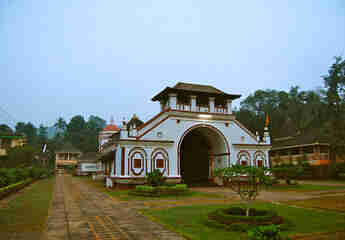
Over time, an entire architectural complex grew here, where calm and serenity reign. The central temple has an element atypical of Hindu architecture: supporting columns inside the building. It was erected in 1566 and underwent a major restoration at the beginning of the 20th century.
The main hall, intended for processions and religious gatherings – Sabhamantapa – became a new addition to the complex. The central gate – mahdwar – is also a new feature; it appeared in the 1980s. It is worth paying attention to the beautiful painting on the door depicting a scene of worship of the linga.
All the buildings in the complex are painted a festive bright terracotta color. In addition to the temple structures, there are utilitarian buildings here as well, for example, for storing sacred statues. Melodies in the local temples are heard at least three times a day, so the instruments are especially protected; there is even a separate building for them.
The tall pagoda, a repository of relics, was nicknamed the "fire tower" because candles are lit on it during holidays.