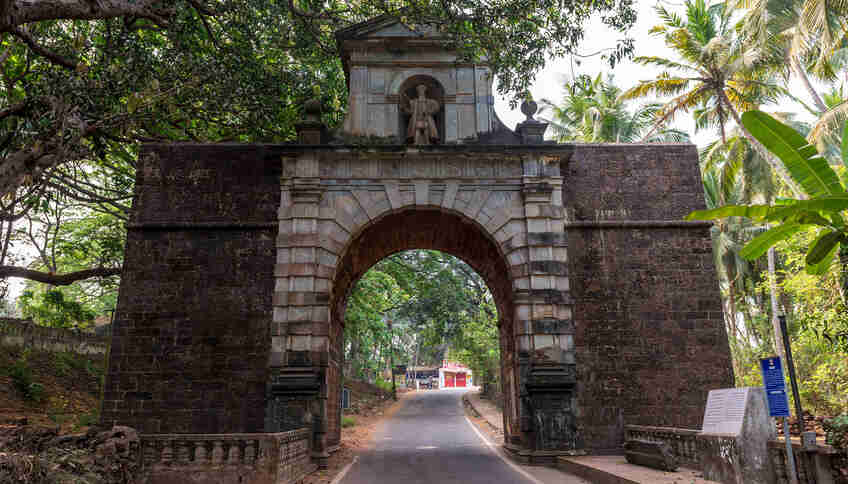
The arch was built in honor of the famous navigator Vasco da Gama and is adorned with his statue. Portuguese by origin, he was the first to discover the sea route to India around Africa. As a reward, he was granted the post of viceroy of the Portuguese colony.
One hundred years after the discovery of the route to India, in 1597, his grandson Francisco da Gama, holding this very same post, inaugurated the arch in honor of his illustrious grandfather.
It became part of the architectural complex of the fortress wall; through its gates, newly appointed rulers entered the colony and received symbolic keys. Hence the name: "Viceroy's Arch."
The material from which the landmark is made, the most popular in Goa, is red laterite. One facade on the side of the Mandovi River is faced with green granite. Originally, the arch had three tiers, but it was destroyed and rebuilt several times, with the most radical changes taking place in '54 of the last century.
A stone scene symbolizing the victory of Christianity has survived here: a Catholic tramples a pagan, but the triumphal gates through which appointed rulers and honored guests entered were not restored.