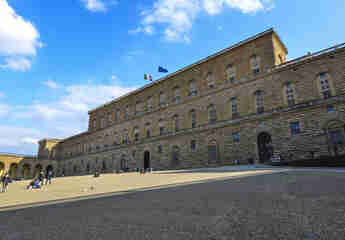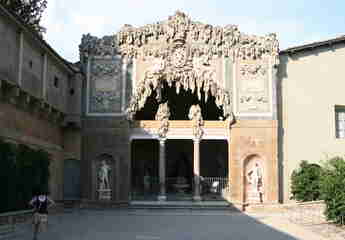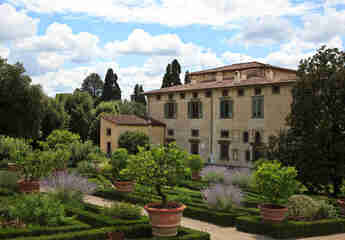
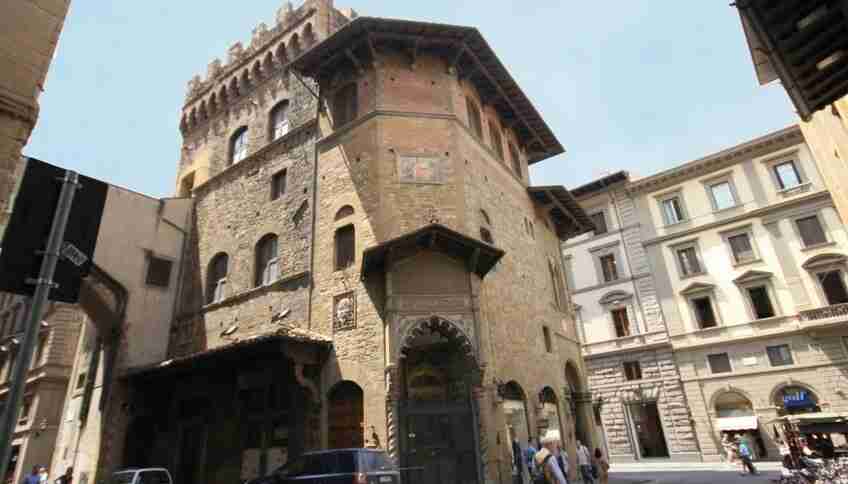
This palace is also called the Palazzo of the Wool Guild — it was built at the beginning of the 14th century, when Florentine wool craftsmanship reached its height.
The Wool Guild was considered one of the richest and most influential in those times, so they could quite well afford to build a separate building. In 1308, an elegant palace with crenellated walls, decorated with carved cornices and bas-reliefs, was designed. Magnificent frescoes have survived inside the palazzo to this day.
Of particular interest is a 14th-century painting depicting all the stages of wool processing. It shows that the wool was first washed in the Arno River, then dried on woven racks, and then combed and softened. After that, women began weaving, and many of them worked in their own homes. A third of the entire city's economically active population was involved in this production, which allowed craftsmen to produce 100,000 rolls of woolen cloth per year!
In 1569, Bernardo Buontalenti built a covered passage from the Wool Guild Palace directly to the church of Orsanmichele. By the way, this church was under the patronage of all the Florentine guilds, which is why its walls are decorated with sculptures depicting each craft.