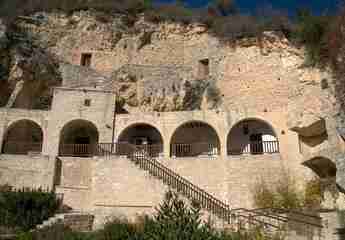
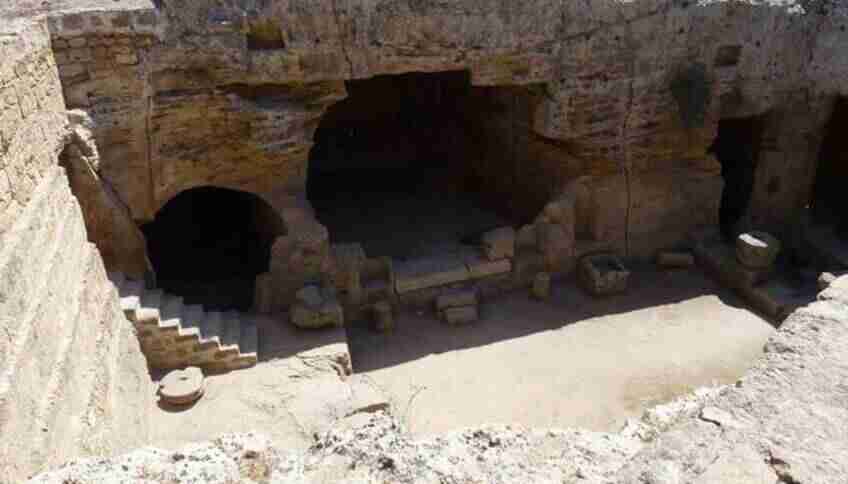
Several caves, connected by passages, once served as a refuge for early Christians. It was here, according to Holy Scripture, that Saint Solomonia hid from her persecutors with her sons. They were persecuted for embracing a new faith. When the family was discovered in these catacombs, every one of them was killed.
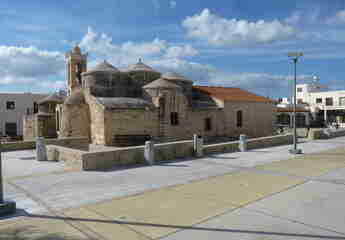
Later - in the 12th century - there was a church here, and fragments of frescoes have even survived from those times. And the names that can be made out on the walls of the catacombs belonged to warriors who took part in the Crusades of the 13th century.
It is quite dark inside, so guidebooks usually recommend bringing flashlights or candles. Besides that, it is worth bringing a ribbon or a scarf. You will need them when you feel like making a wish and tying a piece of cloth to the pistachio tree that grows directly above the catacombs. They say that this simple ritual helps get rid of all illnesses within a year.
Many call this tradition contrived and lacking any historical basis. The spring inside the catacombs is another matter: its water is believed to be healing, and if you taste it or rinse your face with it, you can be cured of eye ailments. Be that as it may, most tourists diligently observe both traditions.