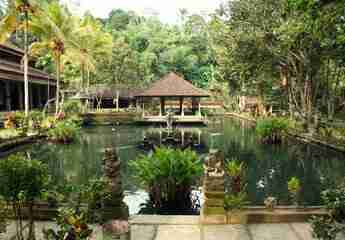
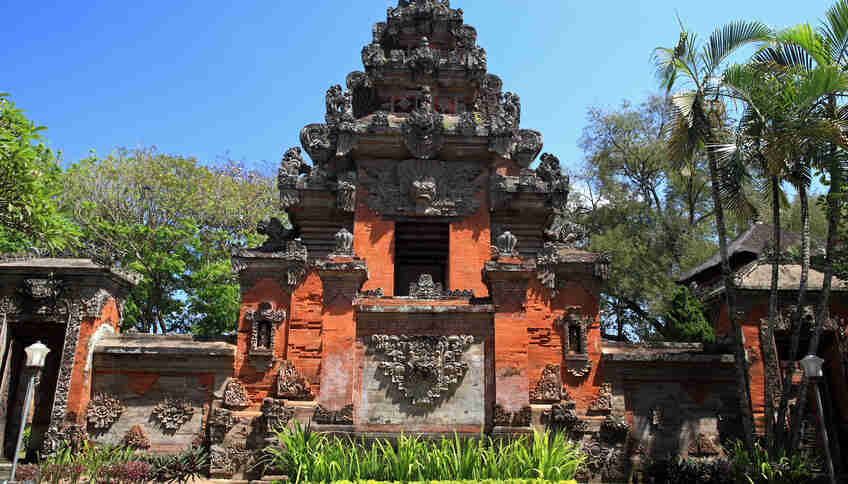
A museum dedicated to the history and culture of Bali was founded at the beginning of the 20th century, with the initiative for its creation coming from both representatives of the Netherlands and local kings. The museum building was constructed from 1925 to 1931 on the site of the royal palace in Denpasar that had been destroyed as a result of the Dutch invasion. During construction, it was decided to combine traditional Balinese temple and palace architecture.
The museum's collection spans various historical eras of Bali, beginning with the establishment of Hinduism on the island, since mythology and religion are closely intertwined for the Balinese. Paintings by Balinese artists amaze with their vivid "equatorial" colors, an abundance of subjects from legends and myths, not without the influence of European painting styles. There are also many wooden sculptures depicting everyday scenes from the lives of ordinary people.
The Bali Museum has many exhibits related to rituals and traditions – these are national costumes, masks, and statues, very colorful and vibrant. A separate hall is dedicated to the colonial period of Bali's history: it contains documentary materials and photographs telling of the people's struggle for independence.