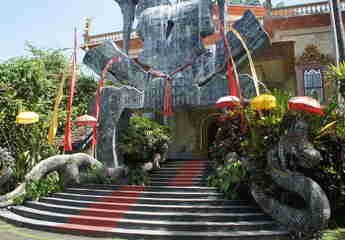
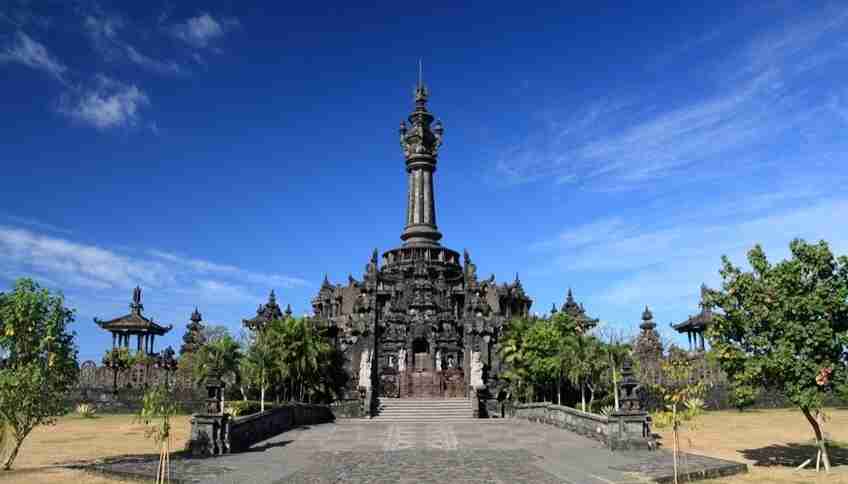
In the center of Denpasar, near the Bali governor's residence, the beautiful austere Bajra Sandhi monument rises. The name of the monument literally translates as "The Struggle of the Balinese Peoples," and it is dedicated to a tragic event. At the beginning of the 20th century, Denpasar was the capital of the Badung province, and constant confrontations between the Dutch army and the local population took place here.
In 1906, Dutch ships approached the coast of Bali and bombarded towns and villages. The Raja of Badung realized that resistance was pointless and decided to commit puputan - suicide in the name of victory. His entire family, servants, and all the Badung nobility followed their raja. They preferred to accept death rather than endure the humiliation of the colonial yoke.
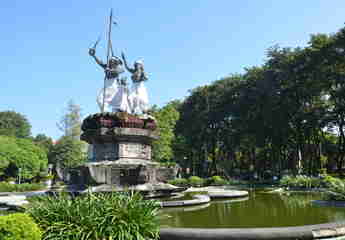
Dressed in white garments and their finest jewelry, hundreds of people came out onto Denpasar square and, before the eyes of the stunned Dutch soldiers, plunged krises, Malay daggers, into their chests. Women, children, and the elderly fearlessly embraced death after their men. The Dutch, having recovered from the shock, began stripping gold jewelry from the bodies of the dead.
This desperate feat of the proud Balinese is commemorated by the majestic stone Bajra Sandhi monument. It also symbolizes the independence of Bali, achieved on August 17, 1945. Bajra Sandhi has 17 corners, 8 entrances, and is exactly 45 meters high.
Inside the monument are halls with dioramas depicting the battles of the Balinese people against the invaders, a library, and a museum dedicated to the ritual suicide of puputan. Having climbed to the third floor of the monument, you can step out onto the rooftop observation deck, which offers a panorama of Denpasar.