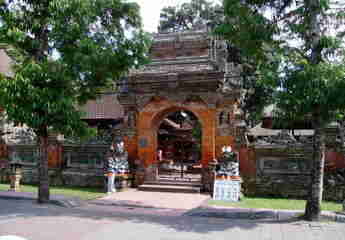
One of the most mysterious and unique temples of Bali, Elephant Cave or Goa Gajah, has a history stretching back more than a thousand years. In 1923, it was discovered not far from Ubud by archaeologists from the Netherlands. The temple was completely abandoned and covered with fragments of stone and earth. Scientists suggest that several centuries ago this area was hit by a powerful earthquake, during which Goa Gajah was buried under rock.
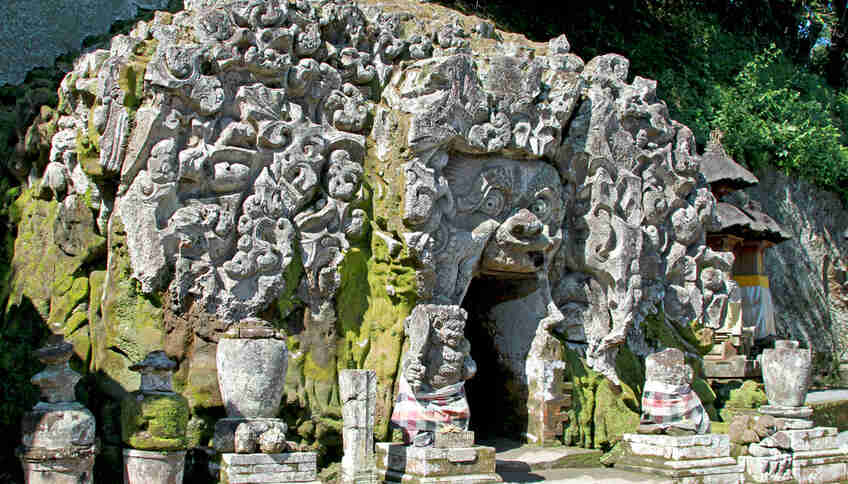
Around the IX century, this mysterious temple was created in a natural complex of caves. The entrance to Elephant Cave is decorated with an intricate pattern carved directly into the massive rock: to get inside the temple, you need to enter the mouth of a huge carved elephant-demon surrounded by a hundred smaller demons. According to legend, when you pass through the demon's mouth, it devours all your bad and heavy thoughts and cleanses your mind and soul of them.
Inside, another elephant awaits you - a statue of the deity Ganesha, carved from stone no later than the XIII century. In the Elephant Cave itself, there are several more thousand-year-old statues dedicated to the masculine and feminine principles - lingams and yonis. Offerings are brought to them and prayers are raised for health, love, family, and the birth of children.
Near the cave are bathing pools that archaeologists excavated only in the 1950s. These incredibly ancient stone pools for symbolic ablutions before meditation are a breathtaking sight. The bathing pools are divided into male and female, each guarded by grand ancient statues of women holding jugs from which water flows into the pool.