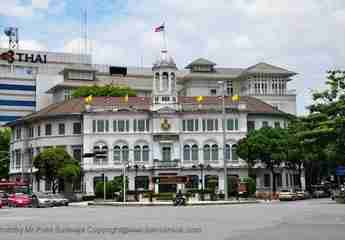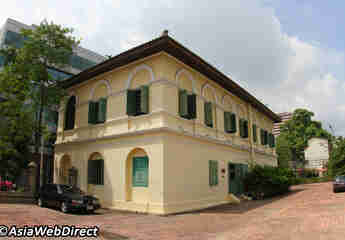
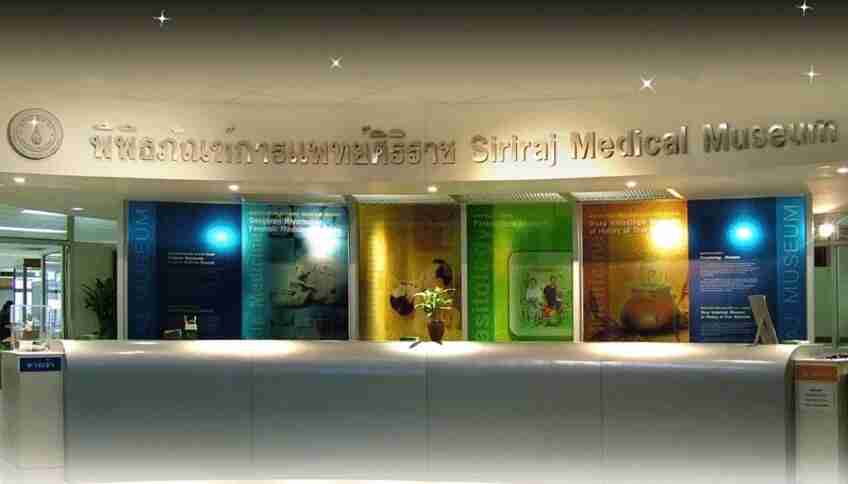
Siriraj Hospital is the largest and oldest in Thailand, located on the western bank of the Chao Phraya River. In 1888, King Rama V founded it and named it after his son, who died at the age of 18 a year before the hospital opened.
The six museums housed within Siriraj Hospital are commonly combined into a single complex known as the “Museum of Death.” There is little that is pleasant here, but much that is interesting.
The Pathology Museum, founded by the American professor Ellis, one of the pioneers of pathological anatomy in Thailand, presents a collection of materials and exhibits devoted to cardiovascular diseases, oncology, and abnormalities in the intrauterine development of the human fetus.
The Museum of the History of Traditional Thai Medicine deals with more pleasant things: Thai massage, as well as various methods and instruments used by folk medicine in Thailand. This museum bears the name of Professor Ouay Ketusingh, who became famous for his contribution to promoting traditional healing methods in academic medicine.
In the Forensic Museum, you can view exhibits related to untimely death in its various manifestations. The Parasitology and Anatomy museums feature extremely specific collections that are not recommended for impressionable visitors.
The most neutral of them all is the Human Evolution Museum, founded by Professor Sud Sangvichien in 1972. Here you will see primitive tools and will also be able to study archaeological finds that confirm the theory of evolution.