On a low plateau 300 meters from the old harbor lies one of the most important archaeological monuments - Kato Paphos Park. It is an entire city that has returned to us from the depths of the centuries. It was discovered by chance: in 1962, a local farmer, plowing the land, came across a hard surface decorated with mosaics.
Later it turned out that this was the floor of one of the four Roman villas that had existed here as early as before the Common Era. The oldest is considered to be the Villa of Dionysus, or rather the floor mosaics that remain from it. One of them depicts Scylla - a woman with six dog heads and twelve legs, who was once an ordinary girl but turned into a monster by the will of an evil rival.
There are several more mosaics in this house that also illustrate scenes from ancient Greek myths. By the way, the house is called the Villa of Dionysus not because he lived there, but because of the image on the largest mosaic - "The Triumph of Dionysus." The other houses received their names according to the same principle: the Villa of Aion, the Villa of Theseus, and the Villa of Orpheus.
Other attractions were discovered next to the villas as well - the Odeon and the Agora, the ruins of the Castle of Forty Columns, and the Asklepieion (an ancient hospital). The Agora is a market square where all trade was concentrated in ancient times. Excavations are still underway at this site.
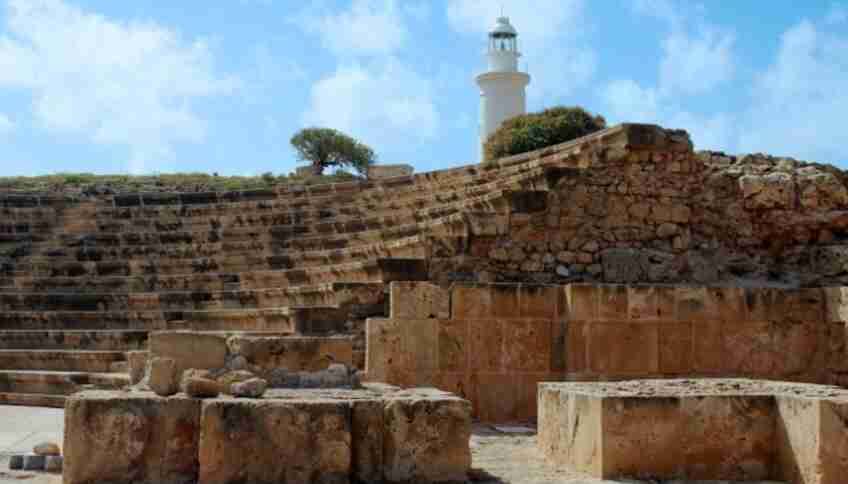
The Odeon is an ancient amphitheater that existed as early as the Hellenistic era. It is almost entirely carved into the rock. At the bottom there is a stage with a diameter of 11 meters. Today, as many centuries ago, theatrical performances and plays are held there.