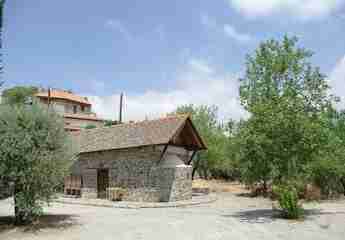
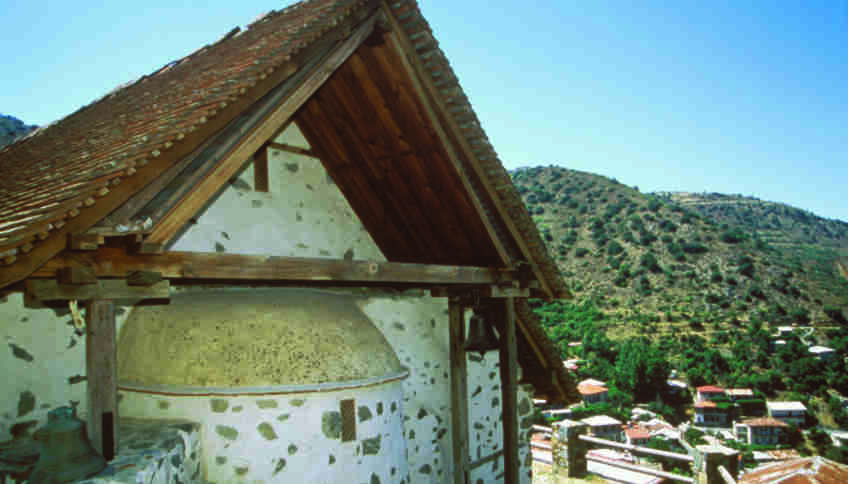
In the Troodos mountains there is an ancient 13th-century Byzantine church. This is the Church of Panagia (Mother of God) of Moutoullas. Outwardly, it does not look much like a church in the traditional sense. It is a small stone building with a triangular roof. An uninformed person would most likely walk past, deciding that it is a barn. But such an architectural solution was quite typical of the mountain churches of Troodos.
There are more than two hundred such structures on the island. The pointed tiled roof did not allow snow or rainwater to accumulate on it and thus protected the wall paintings, which were located not only inside but also outside the building, from destruction. Apparently, the tiles were made right here as well - remains of kilns in which they were fired were found near the church.
Construction of the Church of Our Lady of Moutoullas began in 1279 with funds from benefactors, who are depicted in one of the frescoes. After the construction was finished, painters began its artistic decoration.
Some of the frescoes appeared later than the others. The color palette is mainly red, with virtually no halftones used. If you look a little closer, you can notice that the proportions of the figures are distorted: this is already the influence of book miniatures from Western Europe of the 15th century.
In 1985, this church and nine others in the area were included in the UNESCO World Heritage List. The spirit of antiquity can be felt here even in the smallest details. Just think: how many generations bowed their heads in this church, and how many prayers have these walls heard?