House of Nobility

Flickr, Michael Cavén
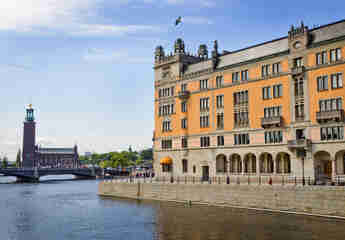
House of Nobility (Swed. Riddarhuset) is a historic Northern Baroque building, constructed in Stockholm, in Gamla Stan, in 1641-1674 for meetings of the Swedish nobility. The elegant building is surrounded by well-kept gardens. The reconstruction of the structure was carried out in 1870, and as a result the building gained a detached wing. At present, the building is still used for its original purpose as a venue for various events of the noble families of Sweden, whose coats of arms adorn the great hall of the House of Nobility.
Royal Palace

Flickr, jawrr
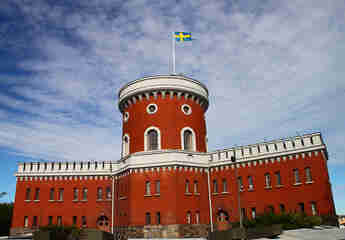
The Stockholm Royal Palace (Swed. Kungliga slottet) is the official residence of the Swedish monarchs on the ceremonial waterfront of Stadsholmen island in the center of Stockholm. In the Middle Ages, Stockholm Castle towered on the site of the palace, founded by Birger Jarl to protect the waterway from the Baltic to Lake Malaren. The history of the city of Stockholm began with the construction of this castle. Under Johan III, the grim castle was replaced by an elegant residence designed in the spirit of the Renaissance. By the end of the 17th century it was considered outdated, and in 1690-97, according to the design of Tessin the Younger, a Baroque palace was erected in its place. It should be noted that until the dawn of the modern era, the royal palace continued to serve not only as the residence of the royal family, but also as the seat of the Swedish government. On May 7, 1697, the barely completed palace burned to the ground, and Tessin began constructing the present building with 600 rooms and a facade 120 meters long.
Livrustkammaren

Flickr, MadGrin
Livrustkammaren, (Swed. Livrustkammaren), or the Royal Treasury, is a museum in the Royal Palace in Stockholm, Sweden. It contains many exhibits related to Swedish military history and the monarchy. Founded by King Gustavus Adolphus I in 1628, Livrustkammaren is one of the oldest museums in Sweden. Items kept in the museum to this day are used in some official ceremonies of the royal family - at weddings, funerals and coronations. Coordinates: 59°19′36″ N 18°04′18″ E / 59.326667° N 18.071667° E (G) (O)59.326667, 18.071667
St. Nicholas Cathedral

tripomatic.com
St. Nicholas Church (Swed. Sankt Nikolai kyrka, also Swed. Storkyrkan - the Great Church) is Stockholm's cathedral (since 1942), the main cathedral of the Diocese of Stockholm and the oldest church in the historic center of Stockholm. The building is an example of Swedish Neo-Gothic architecture with elements of Brick Gothic in the cathedral's interior architecture. Located next to the Royal Palace, the cathedral faces the Royal Square with its eastern facade, while at the same time closing off Slottsbacken street from the west. The streets Storkyrkobrinken, Kallargrand and Trangsund run to the north and west of the building. South of the church is the Stockholm Stock Exchange building. St. Nicholas Church was first mentioned in the will of the knight Johan Karlsson, dated 1279, in which he bequeathed one mark of silver to the 'Stockholm Great Church' ('Stockholms Stora Kyrka'). During the Reformation, the cathedral became Lutheran (beginning in 1527).
Royal Coin Cabinet

nooneel.se
Royal Coin Cabinet (Swed. Kungliga Myntakabinettet) is a numismatic museum located in the historic center of Stockholm. The Coin Cabinet is one of the oldest museums in Sweden, and its collection includes everything from cowrie shells[1] to 21st-century credit cards. The founder of the museum is considered to be King John III, who collected ancient Swedish coins to substantiate Sweden's rights to the image of three crowns on the national coat of arms. It turned out that three crowns had been engraved on Swedish coins starting from the 14th century. By 1630, the collection contained only 57 coins and medals. Over many years, the museum's collection was expanded through donations, the acquisition of other collections, and items discovered during excavations. An important acquisition was made in 1974, when the Coin Cabinet acquired a large number of various banking documents (stocks, certificates, etc.).
Boy Looking at the Moon

Flickr, Nimrandis
Boy Looking at the Moon (Swed. Pojke som tittar på månen), or the Iron Boy (Swed. Järnpojken), is a monument in Stockholm's Old Town depicting a seated boy hugging his knees. Created by the sculptor Liss Eriksson and installed in 1967, the monument became the smallest in Sweden: its height is about 15 cm[1]. It is also known by the popular nickname Olle (Olle). The monument is made of sandstone and wrought iron. The boy sits on a bed placed on a fairly wide pedestal. It was created by Liss Eriksson in 1954 and reflects the sculptor's memories of his childhood, when during sleepless nights he sat on his bed and looked at the Moon outside the window. The monument is located in the courtyard behind the Finnish Church (Finska kyrkan) and is not always mentioned in city guidebooks, but it remains consistently popular with tourists.

Flickr, PriscillaBurcher
The Nobel Museum in Stockholm opened in 2001 - exactly 100 years after the first Nobel Prize was awarded.
The museum is located on the north side of Stortorget Square in Gamla Stan (the Old Town), in the former Stockholm Stock Exchange building, which it shares with the Nobel Library and the Swedish Academy.
The museum's exhibition is dedicated to Alfred Nobel - philanthropist, poet, industrialist and inventor, who became rich from trading dynamite. It is to him that the whole world owes the Nobel Prize, which he bequeathed to be awarded annually to outstanding chemists, physicists, peacemakers, physicians and writers.
In this museum, you can learn about all the Nobel laureates. Interestingly, their portraits are not hung on the walls, as in traditional museums, but move around the hall on hangers, as if in a dry cleaner's. No less curious is the fact that the autographs of great scientists and public figures are located, again, not in frames behind glass, but on the inner side of chair seats. In addition, the Nobel Museum has interactive halls where you can conduct very real scientific experiments.

Flickr, Abariltur
Stortorget, which translated from Swedish means 'Large Square,' is the historical center of the oldest district of Gamla Stan. Since ancient times, this place has been considered the eventful heart of Stockholm - various meetings and events were held in the square, and brisk trade was conducted. It was here in 1520 that a bloody drama unfolded, during which 82 nobles accused of heresy were brutally executed on the orders of the Danish king Christian II. However, it is hard to believe this today - Stortorget is now quiet and cozy.
In the center of the square stands an old well, turned into a fountain in the 18th century by the famous architect Erik Palmstedt. Here you can also see merchants' houses with bright facades and the famous Stockholm Stock Exchange building. Until 1990, stock exchange trading took place there, and now it is occupied by the Swedish Academy - the very same one that awards the Nobel Prize in Literature every year. In addition, this building houses the Nobel Museum and the Nobel Library.
Old Town

Flickr, diskiant
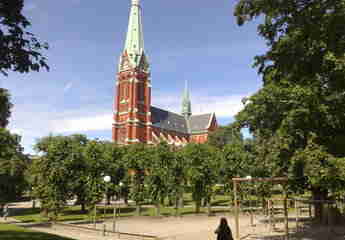
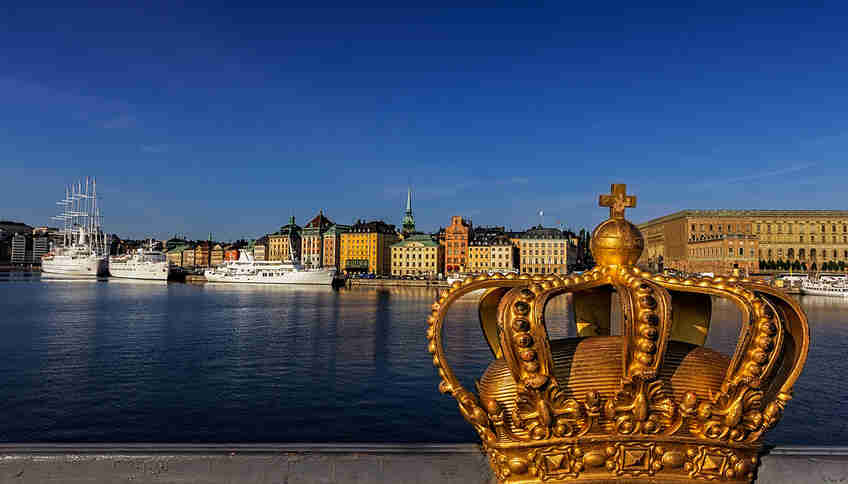
Old Town, Gamla Stan (Swed. Gamla stan [gamla stan]), until 1980 was officially called the Town Between the Bridges (Swed. Staden mellan broarna) - the historic center of Stockholm, located on the island of Stadsholmen (Stadsholmen). The word 'stan' translated from Swedish means 'town.' Initially, the name 'Stockholm' referred only to the Old Town, but as the city expanded, the name spread to the entire territory of present-day Stockholm. As of 2006, about 3000 residents live in the Old Town. The Old Town belongs to the Södermalm district and has an area of 36 hectares. The foundation of this part of the city dates back to the 13th century, so Gamla Stan has many narrow cobbled streets and alleys, and you can also observe old architecture. North German (or Brick) Gothic had a strong influence on the architecture of the Old Town. The Old Town contains:and other attractions.
German Church

Flickr, arjunalistened
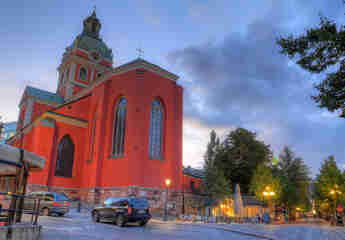
German Church (Swed. Tyska kyrkan, Ger. Deutsche Kirche) or St. Gertrude's Church (Swed. Sankta Gertruds kyrka) is an Evangelical Lutheran church in the 'Old Town' district (Swed. Gamla stan) in the center of Stockholm. The church is located between the streets Tyska Brinken, Svartmangatan and Prestgatan. In the Middle Ages, this quarter was inhabited mainly by Germans, hence the name - 'German.' The church was consecrated in honor of St. Gertrude of Nivelles (626-659), abbess of the Benedictine monastery of Nivelles in present-day Belgium and patron saint of travelers. At present, the church parish organizationally belongs to the Church of Sweden in an extraterritorial district that includes approximately 2000 members living in Stockholm. Services in German are held every Sunday at 11:00. The church is open from May 1 to September 30: daily from 11 to 17 (outside service times)[1].
Mårten Trotzig's Alley

Flickr, E.К.O
Mårten Trotzig's Alley (Swed. Mårten Trotzigs gränd) is an alley in the 'Old Town' (Swed. Gamla stan) of Stockholm. The alley received its final name in 1949. A width of only 90 cm makes it the narrowest alley in Stockholm. The alley got its name in honor of the German merchant Mårten Trotzig (Swed. Mårten Trotzig), who immigrated to Sweden in 1581 and bought property on this alley in 1597, 1599 and 1600.[1] In the Middle Ages, this alley may have been called Trångsund (Swed. Trångsund). In 1544 it is mentioned as the 'narrow stair alley,' and in 1608 as the 'Stair Alley' (Swed. Trappegrenden). The alley received the name of Mårten Trotzig no later than 1733, when on the map of Petrus Tillaeus (Swed. Petrus Tillaeus) it was marked as Trotz Alley (Swed. Trotz gränd). In the middle of the 1800s, the alley was closed with a fence in both directions and was reopened only in 1945.

Flickr, Wanderlust Dreamer
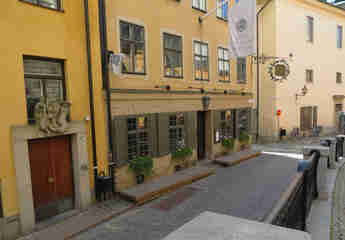
The restaurant Den Gyldene Freden opened in the Old Town back in the first half of the 18th century. If you stop by, pay attention: above the entrance it says 1722. Since those olden times, neither the atmosphere of the establishment nor its interior has changed significantly. This place is even listed in the Guinness Book of Records as the oldest tavern in the world!
The building where the restaurant Den Gyldene Freden is located belongs to the Swedish Academy. Yes, the very same one that awards the Nobel Prize in Literature every year. On Thursdays, the academicians gather at Den Gyldene Freden for what is already considered a traditional dinner, argue, discuss, and share scientific discoveries.
In fact, Den Gyldene Freden is worth visiting not so much for the cuisine as for its authentic atmosphere. The food here is excellent, but the menu, which consists mainly of traditional Swedish dishes, is quite small.