
Flickr, Hannes R
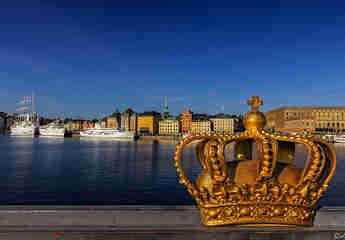
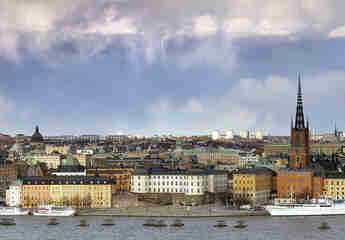
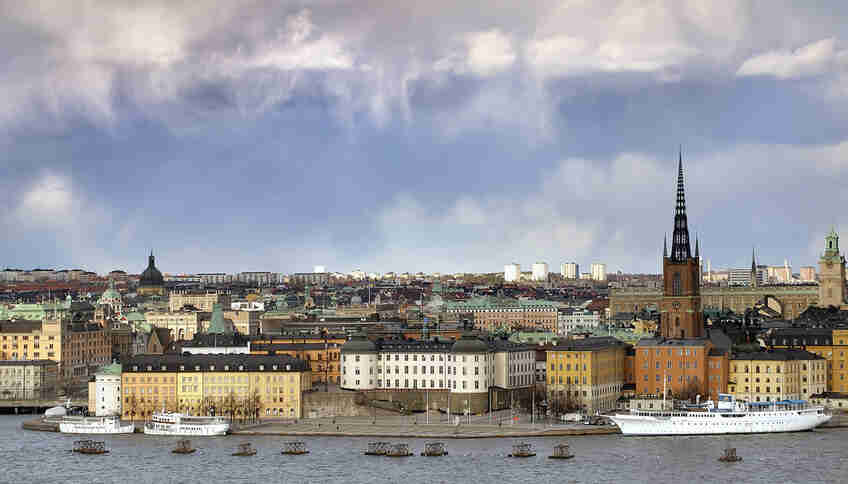
If you walk from the Royal Palace along Myntgatan Street, which turns into Riddarhusbron Street, you will reach Riddarholmen Island. It received its name, which translates into English as 'Knight's Island,' only in the 17th century. Before that, the island was inhabited mainly by monks of a Franciscan monastery dressed in long gray robes. That is why it was then called the Island of the Gray Monks – Gråmunkeholmen.
When the Reformation took place in Sweden at the beginning of the 16th century, the country's citizens converted from Catholicism to Protestantism. Some time later, King Gustav Vasa of Sweden abolished all the monasteries on the Island of the Gray Monks and gave these lands to representatives of the nobility for the construction of castles. All the monasteries were eliminated, and the island became known as the Knight's Island.
Today Riddarholmen is the smallest administrative unit in Stockholm. According to official documents, only one person lives here. As a rule, you will not see crowded throngs on the island; tourists do not come here often. However, peace and quiet do not always reign on Riddarholmen. On Walpurgis Night, the island of royal burials fills with crowds of Swedish youth wishing to communicate with the spirits of their ancestors.
Riddarholmen Church

Flickr, juampatronics
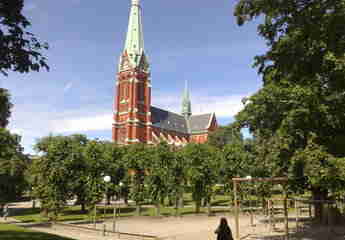
Riddarholmen Church (Riddarholm Church; Swedish: Riddarholmskyrkan) is a church located on Riddarholmen Island, next to the Royal Palace in Stockholm, Sweden. It is the only preserved medieval monastic church in Stockholm. It is the burial church of the Swedish monarchs. The tradition of burying monarchs on Riddarholmen continued until 1950. According to Franciscan chronicles, the monastery on Riddarholmen was founded in 1270, and construction of the church itself began in the 1280s. Originally the two-aisled church had no tower, as towers were forbidden by the order's charter. In the middle of the 15th century, the church was rebuilt and received a third aisle on the southern side, decorated with paintings on lime plaster, some of which have survived to the present day. The church's period of flourishing came during the reign of King Johan III (1568—1592), when it was restored, acquired luxurious decoration, and gained a tower.

aviewoncities.com
This tower was built as part of the city's defensive structures in the 1530s under King Gustav I Vasa. Back then it still bore the name 'Rundeln' and was used for artillery fire.
Both the tower and the fortress wall were built from bricks taken from the Old Klara monastery, which was dismantled by order of the king. Later the fortress wall was destroyed, and the surviving tower now serves as the only reminder of the former defensive structures.
In the 18th century, the tower was renamed in honor of the founder of Stockholm, Birger Jarl, and began to serve more peaceful purposes – as a warehouse.
It is important to note that when this tower was first built, there was an open platform at the top from which it was very convenient to conduct artillery fire in all directions. Now Birger Jarl's Tower is crowned with a green roof, by which it is easy to spot in the Stockholm panorama – you only need to stand near the City Hall and look toward Riddarholmen Island.
Under Gustav I Vasa the tower stood right by the water, but over time the cultural layer grew, and now the walk from the tower to the water is not short.
We advise those who make it to Birger Jarl's Tower to be sure to climb to its top – there is an excellent view of the city from there!