Nordic Museum

Flickr, mikefard
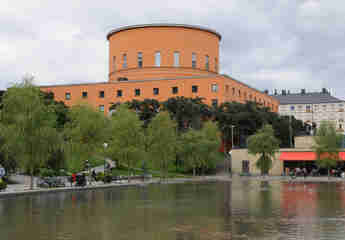
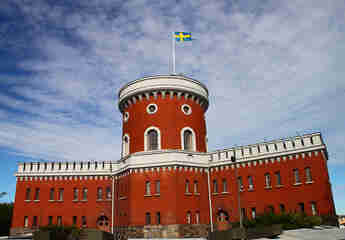
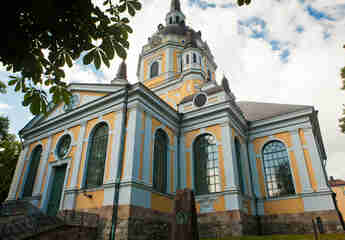
The Nordic Museum (also the Scandinavian Museum, Swedish: Nordiska museet) is a museum of Swedish culture and ethnography located on Djurgården Island in Stockholm. The initiator of the museum's creation was cultural historian Artur Hazelius (1833—1901). The splendid museum building was constructed until 1907 based on the Danish Frederiksborg Castle; in its main hall stands a huge statue of King Gustav Vasa, who restored Swedish statehood. Near the building is the second open-air museum in the world, Skansen, whose creation was also initiated by Hazelius. Until 1963, the Skansen Museum was administered by the Nordic Museum.
Junibacken

wikimedia, Vladimir Garnikyan
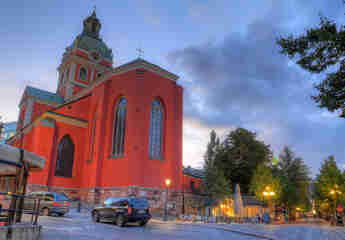
Junibacken[1] (Junibaken[1], Swedish: Junibacken) is a children's cultural and entertainment center, a "fairy tale museum," located in Stockholm on Djurgården Island. The museum recreates places from various children's works by Swedish writers, above all Astrid Lindgren, as well as Tove Jansson, Elsa Beskow, and a number of others, which visitors can not only look at but also play in. Performances and other children's entertainment events are held daily. The museum also has a restaurant and a bookstore where children's books in different languages can be purchased. Another special feature of the museum is the fairy-tale train, on which visitors can travel through scenes from Astrid Lindgren's books. The sets were created based on illustrations by artist Marit Törnqvist (Marit Törnqvist), who worked with Astrid Lindgren.
Vasa Ship

Flickr, overflov
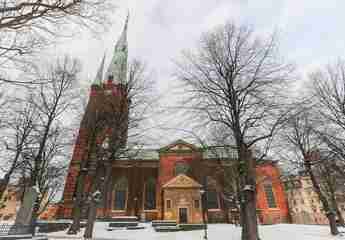
"Vasa" (also "Vasa", Swedish: Vasa) is a Swedish warship launched in the summer of 1628. The ship got its name in honor of the ruling Swedish royal dynasty of the time, the House of Vasa. As one of the largest and most expensive warships of the Swedish fleet, the Vasa was intended to become its flagship, but because of design errors the ship capsized and sank on its maiden voyage out of Stockholm Harbor on August 10, 1628. In 1961, the ship was raised, conserved, restored, and is now exhibited in a museum built especially for it. The Vasa is the only preserved sailing ship from the early 17th century in the world. The history of the Vasa began on January 16, 1625, when King Gustav II Adolf of Sweden signed a contract with Dutch shipbuilder Henrik Hybertsson to build a new warship for the Swedish fleet.
ABBA Museum

arcona.se
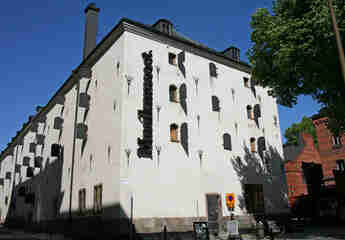
ABBA (in Russian — А́ББА) is a Swedish musical quartet that existed from 1972 to 1982 and was named after the first letters of the performers' names: Agnetha Fältskog, Björn Ulvaeus, Benny Andersson, Anni-Frid Lyngstad. It is one of the most successful groups in the entire history of popular music and the most successful among those created in Scandinavia: the group's records have sold more than 350 million copies worldwide[1][2]. The quartet's singles topped world charts from the mid-1970s (Waterloo) to the early 1980s (One of Us), and compilation albums also headed world hit parades in the 2000s[3]. They remained on radio station playlists, and their albums continue to sell to this day. They were the first representatives of continental Europe to reach number one in the charts of all the leading English-speaking countries (the USA, the United Kingdom, Canada, Ireland, Australia, and New Zealand). ABBA was inducted into the Rock and Roll Hall of Fame on March 15, 2010[4][5].

Flickr, Dave Gorman
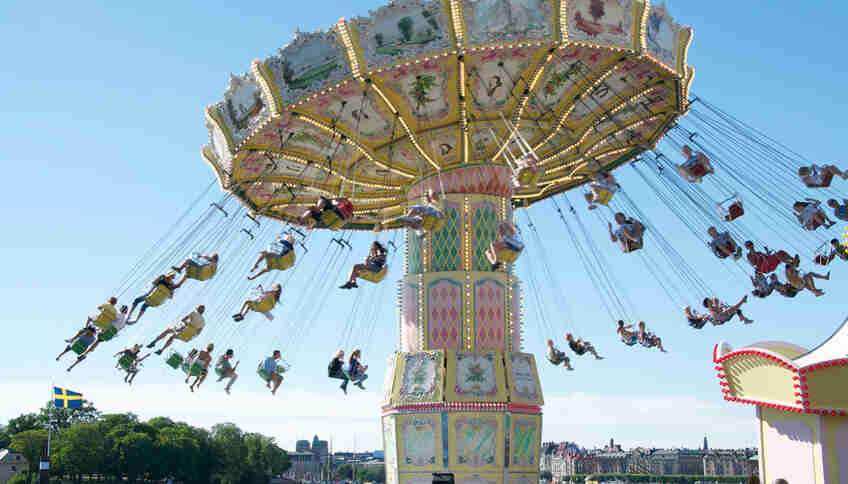
The "Gröna Lund" amusement park in Stockholm is the oldest amusement and rides park in Sweden. It opened in 1883 on Djurgården Island.
Of course, children will enjoy the rides the most, but adults will also have plenty to see here. A haunted house, roller coasters, a Ferris wheel, a funhouse, shooting galleries, go-karts, a Viking ship, a shooting gallery, lotteries, candy kiosks...
Among the typically Scandinavian attractions, many prefer the "Fun House": to reach it, you have to make your way up a staircase that splits apart in different directions, and to leave it, you slide down on a mat.
Visitors also love the "Broom" ride, created based on the books and films about Harry Potter; on it, the whole family can soar through the air on broomsticks.
Particular attention should be paid to the “Eclipse” carousel, opened in spring 2013. This 120-meter-high ride has 12 seats for two, suspended on three-meter metal chains. The maximum rotation speed of the carousel reaches 70 km per hour! From this world's tallest carousel, by the way, there is an excellent view of the Swedish capital.
In addition, concerts by various jazz, pop, and rock performers are often held at the "Gröna Lund" amusement park.
Skansen

Flickr, brendanbear
This article is about a specific museum in Sweden. The word skansen is also used for open-air museums in general. Skansen (Swedish: Skansen) is an ethnographic complex—an open-air museum, a museum-village—located on Djurgården Island (Swedish: Djurgården) in Stockholm. It was founded by Artur Hazelius[en] on October 11, 1891. In 1810, on Djurgården Island, which had previously been property of the Swedish crown, merchant Jon Burgman built a summer pavilion with a beautiful view of the city, and there he also laid out a magnificent garden. Burgman's estate was given the name "Skansen" because nearby there was a small fortress (in Swedish, skans means fortification), where princes of the royal family were trained in military arts. In 1891, Artur Hazelius, director and founder of the Nordic Museum, acquired the "Skansen" estate. He then wrote: "...a hut was moved there, with the aim of founding a museum without equal, namely an open-air folklife and cultural-historical museum."