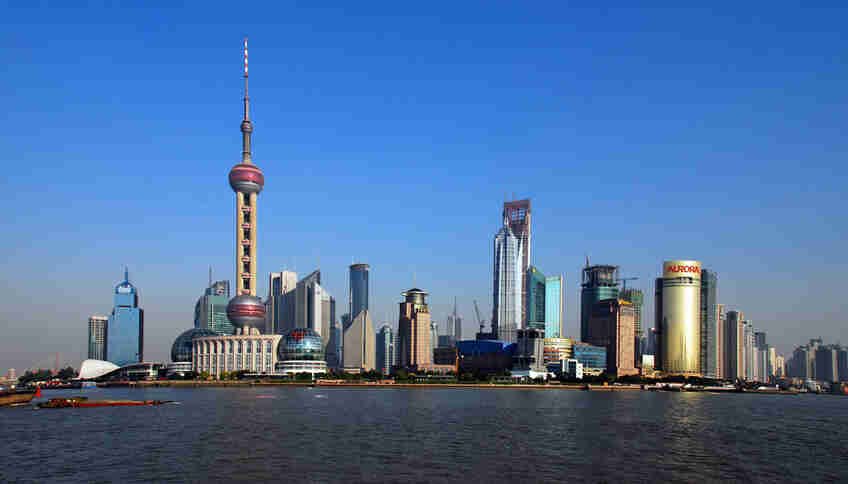
Pudong

Flickr, Dennis Kruyt
Pudong (Chinese: 浦东, pinyin: Pǔdōng), officially the Pudong New Area (Chinese: 浦东新区, pinyin: Pǔdōng Xīn Qū, Palladius: Pudong xinqu) — a district of Shanghai (China). Having begun its development in the 1980s on the site of rice fields, in 15 years Pudong turned into the financial and business center of all China. The word “Pudong” literally means “to the east of the Huangpu.” The Huangpu River borders Pudong on the west, and on the east the district is washed by the East China Sea. The district’s area is 522.8 km², population — 1.5 million people. Pudong forms a sharp and vivid contrast to Puxi (浦西 — “to the west of the Huangpu”) — the old part of Shanghai, located west of the Huangpu. Pudong’s territory is larger than many other districts of Shanghai, and in the future it may possibly be divided into smaller parts.
Oriental Pearl

Flickr, Kenny Teo (zoompict)
The Oriental Pearl TV Tower is the third tallest in Asia (height 468 meters), the fifth tallest TV tower in the world, and the main landmark of the Pudong district in Shanghai. The sphere crowning the tower has a diameter of 45 meters and is located 263 meters above the ground. The tower features: nearby stands the 88-story Jin Mao skyscraper, the fifth largest in the world. At night, the TV tower is illuminated.

123rf.com
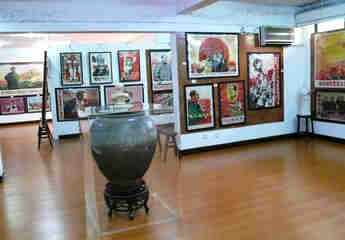
At the foot of the Oriental Pearl TV Tower there is a real time machine — you can transport yourself to ancient China in the Shanghai History Museum. And everything is quite lifelike: life-size people, in real costumes and surrounded by household items from that time. Even the sounds around you are the ones from past eras!
A visit to this museum is strikingly different from the dreary excursions that used to be mandatory in the school curriculum. All the exhibits are “alive”, which makes getting to know them vivid, memorable, and appealing. For example, the bartender in one of the historical displays styled like an old tavern is made so realistically that most visitors greet him. In fact, all the figures are made of wax.
In the museum, you can see everyday scenes from the lives of a rickshaw puller, a geisha, or a nun. Opium evenings are not the images China can be proud of, but at the same time they are also history and, above all, the history of the struggle for the nation’s health. And to keep children from interfering with work, they were seated in barrels. You will see these joyless moments here as well.
Overall, the collections of 30 thousand different museum items are divided into 5 main zones. All these exhibits are devoted to different aspects of the history of the ancient great state: “City Style and Everyday Life”, “The Period of Open Ports”, “Foreign Settlements”, “Traces of Old Shanghai”, “The Road to Huating’s Past” (now the Songjiang district in Shanghai; during the Ming period, one of China’s largest cultural centers).

stracocorp.com
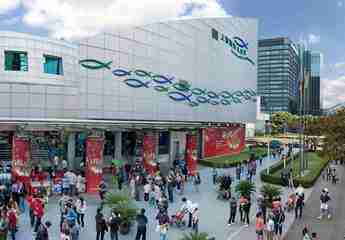
Perhaps this is one of the most interesting places in Shanghai. The aquarium is huge, and if you have some time to spare, we advise coming here not once and not even twice. Besides, the pricing policy very much encourages it: a single visit costs 160 yuan, and an annual pass is 388 yuan.
Shanghai Ocean Aquarium (SOA) is one of the largest aquariums in Asia, welcoming about a million visitors each year. It even holds the world record for the length of its underwater tunnel — 168 meters. In total, SOA presents about 10 thousand marine inhabitants from 450 different species. Thematically, they are divided into 9 zones: “South America”, “Australia”, “Africa”, “Southeast Asia”, “Cold Waters”, “Polar Waters”, “Sea and Shore”, “Deep Ocean Zone”, and, of course, “China”. Here you can even see aquatic animals that have become endangered, in particular the inhabitants of the Yangtze River.
Introducing visitors to the flora and fauna of the world ocean is often staged like a performance. For example, multicolored glowing jellyfish will circle before you to a slow musical composition, creating the effect of a magical dance. People linger by these tanks for a long time. Alongside the most exotic fish and animals, you can see seals, penguins, and alligators. In the Antarctic icy waters zone, you will feel a sharp chill, since all the necessary conditions are created for the native inhabitants of the South Pole. If you want some extreme thrills, you can dive with sharks — the Shanghai aquarium offers that as well.
Jin Mao

beautifulplacesguide.com
Jin Mao Tower (Chinese: 金茂大厦, pinyin: Jīn Mào Dàshà, literally “Tower of Golden Prosperity”, also mentioned in the incorrect transliteration from English as “Jin Mao”) is one of the tallest skyscrapers in Asia and is one of Shanghai’s calling cards. It is located in Shanghai’s Pudong district, next to the Lujiazui metro station. The upper floors are occupied by the five-star Grand Hyatt hotel. As with the Petronas Towers in Malaysia, the key number in this building’s proportions is 8, which in Chinese culture is associated with prosperity. 88 floors (93 if you count the belvedere levels) are divided into 16 segments, each of which is 1/8 shorter than the sixteen-story base. The skyscraper is built around an octagonal concrete central core, surrounded by eight enormous composite columns and eight exterior steel columns. Three sets of steel beams 2 stories high connect the columns to the core on six floors, providing additional safety.
Shanghai Tower

Flickr, Meiguoxing
Shanghai Tower is a supertall building under construction[1] in the Pudong district of Shanghai in China. Upon completion, this building is expected to become the tallest in the Pudong district, surpassing Jin Mao Tower and the Shanghai World Financial Center. According to the design, the building’s height will be 632 meters, total area — 380 thousand m²[2][3][4]. It is assumed that upon completion in 2014 it will be the tallest building in Shanghai, the tallest in China, and the third tallest free-standing structure in the world, surpassed only by Tokyo Skytree (634m) and Burj Khalifa (828m) in Dubai[5], in 2015 it will yield the first Chinese and third world position to the under-construction Ping An International Finance Centre in Shenzhen, and after 2016 will become 5th in the world taking into account also India Tower in Mumbai. 3 August 2013 the Shanghai Tower building was topped out to roof level[6].
World Financial Center

phototricks.ru
Shanghai World Financial Center (Chinese: 上海环球金融中心; English: Shanghai World Financial Center) is a skyscraper in Shanghai, whose construction was completed in summer 2008. The center is 492 m high, making it the fourth tallest skyscraper in the world after Burj Khalifa, Royal Tower, and Taipei 101. The tower was built by the Japanese company Mori Building Corporation. The chief designer of the project was David Malott (David Malott) of the New York company Kohn Pedersen Fox. The building’s unofficial nickname is “the bottle opener”. Construction of the building was actively supported by the Japanese magnate Minoru Mori, which is why the skyscraper unofficially bears his name. [1] The cornerstone was laid on 27 August 1997, but because of the 1998 financial crisis construction stretched over ten years. The actual construction process took four years, since active financing began in 2003, and another year was needed for interior finishing and installation of utilities.

Flickr, Wolfgang Staudt
This collection is among the ten most interesting museums in the city. It will, of course, be most interesting primarily to those curious about scientific achievements and technological progress. However, children will also be delighted by a visit to this museum, because it is better than any textbook on biology, anatomy, chemistry, and physics!
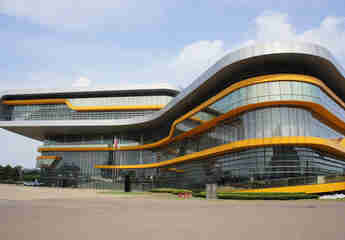
The theme of the museum is evident even from the appearance of the building: it is a spiral soaring into the sky, symbolizing the development of human thought and its eternal movement forward.
Inside, a robot will play the piano for you, you will see huge moving insects as if from science-fiction films, and admire multimedia paintings. Be sure to see what happens to objects in the room with altered gravity. And beat the cheerful drum whose sound arranges itself into intricate pictures. And what geneticists are capable of can be appreciated in the exhibits of Brazilian huts: tomatoes have been implanted with firefly genes, and now, like the insect, they glow in the dark.
The museum has 13 thematic exhibitions and 4 science theaters, including a 4D cinema. Throughout the day they show educational films with various interactive effects, lasting from 15 to 40 minutes.
A useful tip: if you want to leave the museum for a while, go to the turnstiles installed at the exit: they will scan your hand, remember the data, and then let you back in. It is a science and technology museum, after all!
Shanghai Oriental Art Center

Flickr, dizzylizzy1227
Shanghai Oriental Art Center (Traditional Chinese: 上海東方藝術中心, Simplified: 上海东方艺术中心, pinyin: Shànghǎi Dōngfāng Yìshù Zhōngxīn, Palladius: shanghai dongfang ishu zhongxin) is one of the largest cultural venues in Shanghai and in all of China. It is dedicated to the performing arts, but also includes spaces for exhibitions, conferences, and more. It was built from a design by the French architect Paul Andreu. The building was officially opened at the end of 2004 and became a symbol of the synthesis of Western and traditional art forms in China in recent years. The Center hosts various cultural events, including the Shanghai concert of the Berlin Philharmonic Orchestra here in 2005. The facades of the building are made of laminated glass with perforated metal inserts. Five interconnected semi-spherical halls or “petals” resemble a butterfly or an orchid flower in plan; each of the “petals” represents a foyer, Theater Hall, Concert Hall, Exhibition Hall, and Opera Hall.

Flickr, www.bazpics.com
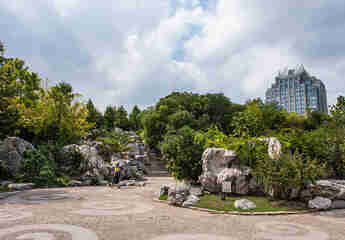
Century Park came into being at the turn of the two millennia, in 2000, hence the name. At present, it is the largest park in Shanghai, covering an area of 140 hectares.
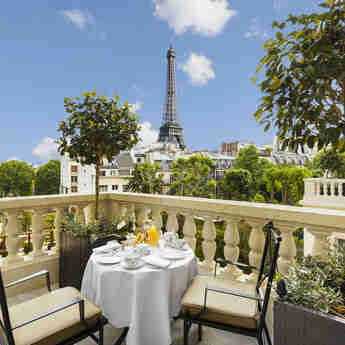
You can stroll and admire the beauty here for hours. The green space embodies the idea of the unity of nature and humankind, the inseparable connection of Mother Earth and all living things on it. The park is very well kept, with many unusual plants and flower arrangements; it even has its own Eiffel Tower.
In Century Park, one large lake sits beside smaller ones, and its entire territory is entangled in a web of canals. For a trip along them you can rent a boat or a pedal boat. For those used to traveling on land, we recommend bike rental. It is especially interesting to try a bicycle for a group. If there are many of you, we advise pedaling all together; it turns out very amusing, because the driving style is highly unusual.
The park has carousels and rides, as well as several cafes. By the way, on weekends local residents often come here for a picnic: they settle on spread blankets, right on the lawns, as is customary in many European countries.
In the morning, tai chi classes are held in the park. If you have time to spare, we recommend getting acquainted with this ancient Chinese teaching, which includes many aspects of personal development. For beginners, it can be considered at least as a simple health-improving gymnastic exercise routine.