
Flickr, ken_thuonghai91
Updated for 2026: Ho Chi Minh City is still easy to tackle in a day if you stay central, but leave room for heat, traffic, and museum time.
This is one of Vietnam's best art museums, and a very good first stop if you want a feel for the country's visual culture before diving into the city's street energy.
The mansion itself is part of the appeal. Its pale facade looks French at first glance, but the decorative details and layout show a strong Chinese influence too.
Inside, the collection is spread across three floors, mixing fine art, sculpture, lacquer work, ceramics, and older artifacts. Give yourself time to wander instead of rushing from room to room - the building and the atmosphere are as memorable as the exhibits.
Cho Lon (Chinatown)

Flickr, matt austen
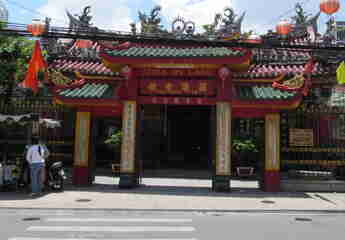
Cho Lon, often written Cholon, is Ho Chi Minh City's historic Chinatown. It spreads across District 5 and nearby streets west of the Saigon River, and it feels very different from the polished center. Come here for Chinese temples, old shop houses, medicine stores, market lanes, and a glimpse of trading-era Saigon. If you only have one day, even a short wander adds a richer, more local layer to your route.

Flickr, Vương Hoàng Khanh [01288884404]
Even if you're not a market person, Ben Thanh is worth seeing once. It's loud, fast, colorful, and far more atmospheric than a mall.
By day it's a busy market; after dark the surrounding streets lean more toward food and souvenir browsing. Either way, it's one of the city's best-known landmarks.
The market dates back to the French colonial period, and the current building has been part of city life for well over a century. That alone makes it more than a shopping stop.
Food is the main draw for many visitors: Vietnamese coffee, spices, sweets, snacks, and quick meals are everywhere.
You'll also find clothes, bags, accessories, and the usual souvenir mix. Bargaining is part of the experience, so keep it light and good-humored.
War Remnants Museum

Flickr, Mark Turner
The War Remnants Museum is one of the most important and emotionally heavy stops in the city. The museum, at 28 Vo Van Tan Street in District 3, focuses on the Vietnam War and above all its human cost. Inside are themed galleries of photographs, documents, and wartime artifacts; outside, military vehicles and aircraft fill the courtyard. It is not a light visit, but it is an essential one if you want context for modern Vietnam.

Flickr, austinluu
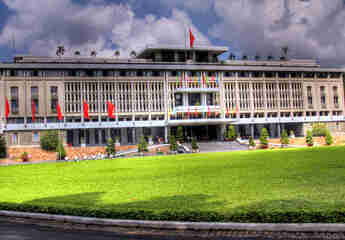
Reunification Palace, also called Independence Palace, is one of the clearest windows into 20th-century Vietnamese history.
Before the current building, the site held the residence of the French colonial governors. The modern palace rose in the 1960s after the earlier structure was badly damaged, and it later became the presidential palace of South Vietnam. In April 1975, the image of tanks entering the grounds turned it into one of the defining symbols of the war's end.
Today visitors can walk through the state rooms, meeting halls, command areas, and preserved interiors. Much of it feels frozen in time, from the communications equipment to the formal reception spaces.
Outside, the lawns, fountains, and old trees soften the mood. Then you notice the military hardware on display, and the setting suddenly makes much more historical sense.

Flickr, framptoP - E.V.I.L. Photographer
Notre-Dame Cathedral is one of those Saigon sights that surprises people the first time they see it. With its red brick facade and twin towers, it feels like a fragment of 19th-century France dropped into the middle of Vietnam.
The cathedral's interior is relatively restrained, which makes the stained glass and long nave stand out even more. Even viewed from outside, the square around it is one of the easiest places to pause and take in the colonial-era core.
The two bell towers rise 58 meters above the street, and the statue of the Virgin Mary in front has long been a local point of interest. Together with the post office next door, the cathedral anchors one of the most photogenic corners of Ho Chi Minh City.

Pinterest.com, Sunny Merindo
Ho Chi Minh City's Central Post Office is one of the best-loved colonial buildings in the city, right in the heart of the old center. Built in the late 19th century, it remains both a working post office and a major landmark.
On paper it still does the practical things you expect: mail, parcels, stamps, postcards, and basic postal services. In reality, most people come for the architecture.
Inside, the space feels more like a grand European train hall than a post office, with its high vaulted ceiling, arched windows, patterned floor, and long wooden counters.
A large portrait of Ho Chi Minh anchors the main hall, giving the elegant colonial interior a distinctly Vietnamese historical frame.

Flickr, Mark Ferdinands
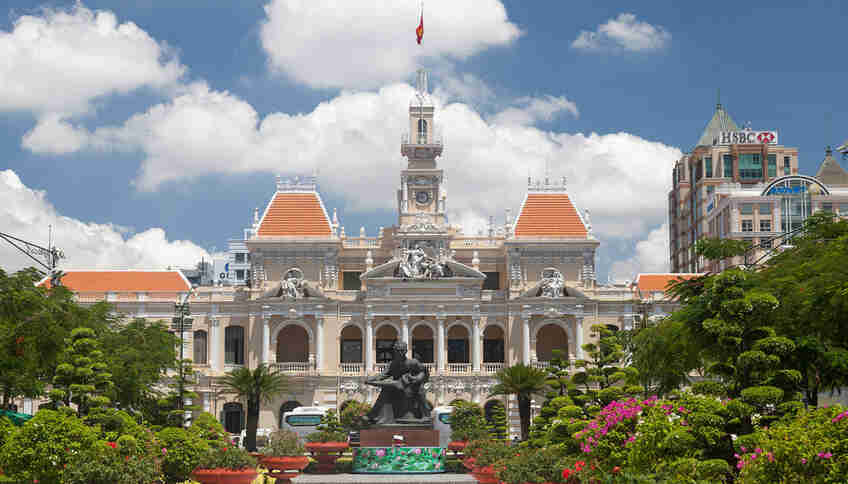
This elegant landmark was built between 1898 and 1908 and was originally known as the Hotel de Ville.
Its facade still makes an impression: arched windows, Corinthian columns, ornate relief work, and a distinctly European grandeur that feels unusual in Vietnam.
Over time the building shifted from colonial use to city administration, and it remains an official government building today.
You can't normally go inside, but it is still worth a stop - especially in the evening, when the facade and the small square in front are beautifully lit. You'll also see the familiar statue of Ho Chi Minh with a child nearby.

Flickr, Asiacamera
The Ho Chi Minh City Opera House is one of the city's finest surviving examples of French colonial architecture, built at the end of the 19th century.
Its appeal isn't just the facade. The auditorium was designed as a serious performance venue from the start, and the building still feels theatrical before you even step inside.
Like many central Saigon landmarks, it passed through different roles during the 20th century before eventually returning to cultural use after reunification.
Today it looks especially good after dark, when the lighting brings out the details of the facade and the whole block takes on a more dramatic, old-Saigon feel.

vietnammuslimtours.net, TNK Travel Co.,Ltd.
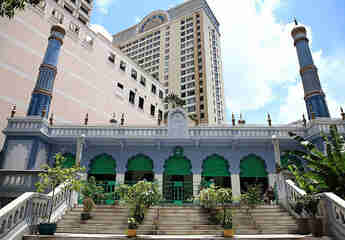
The Central Mosque offers a quieter, more understated kind of beauty than the city's grand Catholic churches or ornate temples. Hidden in the busy Dong Khoi area, it has been a calm stop here since the 1930s.
The white-and-blue exterior, with its slim minarets and clean lines, is elegant rather than flashy. It stands out precisely because it feels so restrained.
The mosque was built by South Indian Muslims, and it still serves the local community today. Friday is the liveliest time to visit, but modest clothing and bare feet are expected whenever you step inside.
The interior is simple, with the focus on light, tilework, arches, and proportion rather than decoration. That simplicity is exactly what gives the place its atmosphere.
Bitexco Financial Tower

giacavattu.com.vn
Bitexco Financial Tower remains one of the defining features of the Ho Chi Minh City skyline. Rising 68 floors above the center, the tower was inspired by the shape of a lotus bud and quickly became a symbol of the modern city. It is no longer the tallest building in Vietnam, but it is still one of the best-known. If you want to end the day with a wider view of the city you have just crossed, this is the right finale.